Showing posts with label Neanderthal. Show all posts

November 2, 2016

Main Neanderthal admixture episode was c. 100,000 years ago.


This is really nice to read, considering that the archaeological data strongly favors a single out-of-Africa migration around that date (c. 125 Ka to Arabia and Palestine, see this, this and this among others, c. 100 Ka to South and East Asia) and that my own genetic modeling on mitochondrial DNA also fits that chronology (unlike most "molecular clock" scholastic rantings that are sold as "scientific truth" with no substantive backing whatsoever).

Admittedly the paper is not new (was published in February) but you know I have been missing important stuff with my information-overload stress crisis, so I'm making up now. Thanks to Ryan for bringing this up.

Martin Kuhlwilm et al., Ancient gene flow from early modern humans into Eastern Neanderthals. Nature 2016. Pay per viewLINK [doi:10.1038/nature16544]

Abstract

It has been shown that Neanderthals contributed genetically to modern humans outside Africa 47,000–65,000 years ago. Here we analyse the genomes of a Neanderthal and a Denisovan from the Altai Mountains in Siberia together with the sequences of chromosome 21 of two Neanderthals from Spain and Croatia. We find that a population that diverged early from other modern humans in Africa contributed genetically to the ancestors of Neanderthals from the Altai Mountains roughly 100,000 years ago. By contrast, we do not detect such a genetic contribution in the Denisovan or the two European Neanderthals. We conclude that in addition to later interbreeding events, the ancestors of Neanderthals from the Altai Mountains and early modern humans met and interbred, possibly in the Near East, many thousands of years earlier than previously thought.

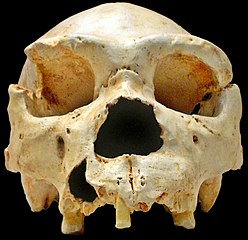
As the title and the abstract say, Homo sapiens migrants out of Africa (i.e. into Asia and only later into its periphery) genetically influenced the branch of Neanderthals represented by the Altai specimen, what we can consider "Asian Neanderthals" but not the branch represented by El Sidrón and Vindija ("European Neanderthals"). This happened some 100 Ka ago, coincident with the archaeologically demonstrated dates for the out-of-Africa migration for our species and also likely Neanderthal-Sapiens hybrid fossils like Skhul-5 (right -- notice its lack of chin, a key and universal trait of H. sapiens, which allows us to give up with heavy browridges and other facial armature and still retain a strong bite, among other Neanderthaloid features, however it has a rounded and elevated skullcap with a high, almost vertical, forehead, a clear Sapiens trait). 

The flow was in both directions. I do not have access to the paper itself but it is clear in the supplemental material (EDF-1). This hybridization event was distributed quite evenly among all "Greater Asians" or "non-Africans" in our species. The slightly lower score in French is surely caused by Neolithic admixture later on, bringing African-like genetics to Europe, which are absent in most of Asia, as well as in aboriginal Australasia and America. 

Another apparent highlight in this paper (EDF-7) is that a second Neanderthal population, belonging to what I called above "European Neanderthals" (but related only to El Sidrón and not to Vindija) seems to have starred a second hybridization event affecting mostly Eastern populations (Han Chinese and Papuans in this paper's dataset). This, if confirmed, is quite unexpected and would require some explanation of the kind: there was a "European Neanderthal" population somewhere in Asia in the early times of Homo sapiens colonization and they got again admixed but this time affecting the derived populations in an irregular way. These irregularities would eventually be "flattened", I guess, at regional levels but for then the West Eurasian founders were out of the way. 

A somewhat related recent paper, also mentioned by Ryan, is S. Sankararaman et al., The Combined Landscape of Denisovan and Neanderthal Ancestry in Present-Day Humans (Current Biology 2016), also pay-per-view, so judging on supplemental materials only. I must say I don't like this one that much but at least table S2 offers a summary of the state of the art of estimates of Neanderthal and "Denisovan" (H. heidelbergensis) admixture in a lot of populations (and not just three). It is apparent there that there is more Neanderthal admixture towards the East of Asia or "Greater Asia", what is very much counterintuitive and demands that a Neanderthal population (a "European Neanderthal" one per Kuhlwilm's data) existed somewhere towards the East of Asia, enabling for this secondary Neanderthal admixture event. 

Perplexing maybe but that's what the data says. I wish we could find and sequence some of those Eastern Neanderthals which are so far just a genetic ghost, with the only possible known paleontological evidence being the Narmada skullcap, which is admittedly very much Neanderthal-like but is not associated in any way to Neanderthals' typical industry: the Mousterian, which has never been found east of Iran nor south of Mongolia. 

Some have argued that the Zhirendong jaw, one of the key evidences for c. 100 Ka H. sapiens settlement of much of Asia, is a hybrid one, with clear H. sapiens traits (among others it has a chin) but also maybe "archaic" traits (among others its chin is rather small). If so, then we may be at the same time in this case before evidence of both the early migration of our species, Homo sapiens, to East Asia (or SE Asia, as it's quite to the south of China) and the second admixture event with Neanderthals, with those ghostly Oriental Neanderthals, related to El Sidrón ones in the Far West, quite paradoxically, that we have yet to properly identify.

May 4, 2016

Back to work

My apologies to readers for being for so long in "lazy mode". Actually I got interrupted largely by a request to provide a quality article on Basque, Sardinian and European origins for a soon to be published collective book in Basque language. This took me a lot of time and energies in late March and early April, so basically I put everything else on hold. The last weeks I've been resting indeed, what may be aggravated by a declining health that makes me sleep irregularly and often for much longer than most of you do. Being fed up with Internet information feeds and a quite active political reality also drain my energies to other endeavors, not to mention paperwork.

In this sense I want to announce that I have begun recently a new multi-purpose blog in Spanish language: Bagauda. Most of it is politics, I warn you, but I have also included the unedited raw article for that book I mention in the previous paragraph (prior to translation to Basque and corrections). I'm reasonably sure that those of you who have Spanish as primary or even secondary language will be interested in having a look (→ here).

Another relevant entry was the announcement of the upcoming congress on Iruña-Veleia to be held on May 7 in Vitoria-Gasteiz. You can still register but hurry up.

I will now proceed to comment in a separate entry on the news of the week, the Fu et al. study of a large array of Paleoeuropean ancient DNA. But, before I get to that, I must mention some interesting studies that I have not been able to get time to even properly read, let alone discuss:

  • K. Voskarides, S. Mazières et al., Y-chromosome phylogeographic analysis of the Greek-Cypriot population reveals elements consistent with Neolithic and Bronze Age settlements. Investigative Genetics 2016. Open accessLINK [doi:10.1186/s13323-016-0032-8]
  • B. Vernot et al., Excavating Neandertal and Denisovan DNA from the genomes of Melanesian individuals. Science 2016. Freely accessible (with registration?)LINK [doi:10.1126/science.aad9416]
  • Y.Y. Waldman, A. Biddanda et al., The Genetics of Bene Israel from India Reveals Both Substantial Jewish and Indian Ancestry. PLoS ONE 2016. Open access → LINK [doi: 10.1371/journal.pone.0152056]

Another intriguing new independent paper by a regular visitor and commenter to this blog, Olympus Mons, that I have not yet read is:

→ R1b from Sulaweri-Shomu to Bell Beaker, available as PDF or in blog format.

He seems to argue for a Caucasus origin of both the lineage and Bell Beaker phenomenon. I have no opinion as of yet, because, simply put, I have not been able to read it in full.

Another regular visitor here to have put an independent paper online, also on the issue of R1b origins, is Paul Conroy:

→ Anatole A. Klyosov and Paul M. Conroy, Origins of the Irish, Scottish, Welsh and English R1b-M222 population. Available at Paul's Academia.edu account.

Again I have not yet got the opportunity to read it, so no opinion. 

Feel free to use this entry to comment on any of the aforementioned studies or articles or to provide info about stuff I may have missed.

March 16, 2016

H. heidelbergensis is Neanderthal ancestor and not 'Denisovan' cousin

Quickies

The unprecedented sequencing of a small fraction of the autosomal DNA of Homo heidelbergensis from the Sima de los Huesos of Atapuerca proves that they are in direct ancestral line to H. neanderthalensis and not particularly related to Denisovans.

Matthias Meyer et al., Nuclear DNA sequences from the Middle Pleistocene Sima de los Huesos hominins. Nature 2015. Pay per viewLINK [doi:10.1038/nature17405]

Abstract

A unique assemblage of 28 hominin individuals, found in Sima de los Huesos in the Sierra de Atapuerca in Spain, has recently been dated to approximately 430,000 years ago1. An interesting question is how these Middle Pleistocene hominins were related to those who lived in the Late Pleistocene epoch, in particular to Neanderthals in western Eurasia and to Denisovans, a sister group of Neanderthals so far known only from southern Siberia. While the Sima de los Huesos hominins share some derived morphological features with Neanderthals, the mitochondrial genome retrieved from one individual from Sima de los Huesos is more closely related to the mitochondrial DNA of Denisovans than to that of Neanderthals2. However, since the mitochondrial DNA does not reveal the full picture of relationships among populations, we have investigated DNA preservation in several individuals found at Sima de los Huesos. Here we recover nuclear DNA sequences from two specimens, which show that the Sima de los Huesos hominins were related to Neanderthals rather than to Denisovans, indicating that the population divergence between Neanderthals and Denisovans predates 430,000 years ago. A mitochondrial DNA recovered from one of the specimens shares the previously described relationship to Denisovan mitochondrial DNAs, suggesting, among other possibilities, that the mitochondrial DNA gene pool of Neanderthals turned over later in their history.


Some articles that describe the findings:
at Público (in Spanish)

Matthieson also found that the Sima de los Huesos hominids were closer to Denisovans and Neanderthals in mtDNA two years ago. But this sequencing of their nuclear DNA puts them much closer to Neanderthals instead.

Prüffer et al. found in 2013 that Neanderthals form a cline with "Denisovans" in nuclear DNA but not in mtDNA, in which they are closer to us. This one is a very interesting read for background, as it explores in great detail the various possible scenarios.

That "Denisovans" could be closely related to H. erectus (a catch-all term for most archaic populations, particularly in Asia) has been considered as very possible before (Waddell et al. 2012) but there is no genetic confirmation so far, neither strong rejection. Getting DNA from such ancient specimens is considered a breakthrough and this partial sequencing of 400,000 years ago is believed to be within the very limits of absolute possibility.

[Conclusions edited on Mar 19th because I got it all wrong and don't wish to keep confusing anybody else. Instead I listed several relevant background studies, judge yourself].

January 23, 2016

Evidence of human presence in the Arctic 45,000 years ago

Quickies

Pre- and post-mortem injuries in a mammoth carcass found at 72°N in the Yenisei River basin and a separate finding of a killed wolf of similar age indicate that some humans were hunting in the Far North, 10,000 years before any other evidence known before (Mousterian implements from Komi Republic, surely made by H. neanderthalensis).

My first hunch is that the authors of these killings were also Neanderthals of the same Arctic population as the one living in Komi Republic, across the Urals. Another possibility could be that they were related to Ust'-Ishim man, a H. sapiens specimen from c. 45 Ka BP from further south-west, in the Ob-Irtish rivers' basin or to people established in Altai, who belonged to various human species (H. heidelbergensis, neanderthalensis and sapiens), depending on period and specific site.

Vladimir V. Pitulko et al., Early human presence in the Arctic: Evidence from 45,000-year-old mammoth remains. Science 2016. Pay per viewLINK [doi:10.1126/science.aad0554]

Abstract

Archaeological evidence for human dispersal through northern Eurasia before 40,000 years ago is rare. In west Siberia, the northernmost find of that age is located at 57°N. Elsewhere, the earliest presence of humans in the Arctic is commonly thought to be circa 35,000 to 30,000 years before the present. A mammoth kill site in the central Siberian Arctic, dated to 45,000 years before the present, expands the populated area to almost 72°N. The advancement of mammoth hunting probably allowed people to survive and spread widely across northernmost Arctic Siberia.

January 9, 2016

Good documentaries on human Prehistory

I just watched the documentary "First Peoples - Asia" (by NOVA) and found it quite good, discussing many of the issues that I and the readers of this blog have been following and discussing the last years on the settling of Asia (and geographical dependencies): the Zhirendong jaw, the Nubian points of Arabia, the archaic admixture events... 

The only issue is that for some odd reason (copyright masking?) interviewed people voices often have a too high pitch.

I hope the other four documentaries of the series are similarly good. I haven't watched them yet but the full playlist is embedded below beginning with the Asian colonization movie. For many readers it won't be that interesting personally (they already know all or most of it, maybe even better than what the movie explains) but it is still a promising tool to share your hobby with family and friends, so watch it in good company. 

Enjoy!


Update (Jan 9):

I've watched already four of them (Africa, Asia, Australia and Europe) and the European one is no doubt the worst: a superficial Neanderthal hybridization neo-myth spearheaded by John Hawks. Also the only map or description of the route followed by modern humans to Europe is absolute nonsense: directly from Africa via Palestine, when in fact it's extremely clear that at least most of the lineages went all the way to SE Asia and back before ever entering Europe. What happened to the spear in the rib of Zawi Chemi Shanidar man? What happened to the very fast replacement in the early Aurignacian, coincident with the Campanian Ignimbrite eruption? What about dogs? Not a word! Just whitewashing of the probably quite violent Sapiens-Neanderthal interaction. You can skip that one, really, it's pretty much nonsense.

Some hyper-hybridationism permeates all the documentaries but the others seem much better: the Asia one is quite good, the Africa one is not bad either (although could be much better if they paid more attention to archaeology, also Africa deserves 50% of the documentary space probably), the Australia one is OK but it simply ignores Papua and Wallacea altogether, what is a bit perplexing to say the least. The Europe one is just horrible: it has some facts but half of it its John Hawks' preaching his particular ideology about people being oh-so-nice that they probably used spears as toothpicks, Paabo making a lot of extra work for the cleaning crew (spectacular admittedly but should be in a separate Neanderthal docu, not in one dedicated to H. sapiens) and some real archaeology scattered around (but definitely not enough at all).

November 2, 2015

Selection against Neanderthal introgression?

Quickies

A couple of papers have been pre-published these days discussing the apparent selection against most (but not all) of the Neanderthal inheritance among modern ex-Africa humans.

Ivan Juric, Simon Aeschbacher & Graham Coop, The Strength of Selection Against Neanderthal Introgression. BioRxiv 2015 (pre-pub). Freely accessibleLINK [doi: http://dx.doi.org/10.1101/030148]

Abstract

Hybridization between humans and Neanderthals has resulted in a low level of Neanderthal ancestry scattered across the genomes of many modern-day humans. After hybridization, on average, selection appears to have removed Neanderthal alleles from the human population. Quantifying the strength and causes of this selection against Neanderthal ancestry is key to understanding our relationship to Neanderthals and, more broadly, how populations remain distinct after secondary contact. Here, we develop a novel method for estimating the genome-wide average strength of selection and the density of selected sites using estimates of Neanderthal allele frequency along the genomes of modern-day humans. We confirm that East Asians had somewhat higher initial levels of Neanderthal ancestry than Europeans even after accounting for selection. We find that there are systematically lower levels of initial introgression on the X chromosome, a finding consistent with a strong sex bias in the initial matings between the populations. We find that the bulk of purifying selection against Neanderthal ancestry is best understood as acting on many weakly deleterious alleles. We propose that the majority of these alleles were effectively neutral-and segregating at high frequency-in Neanderthals, but became selected against after entering human populations of much larger effective size. While individually of small effect, these alleles potentially imposed a heavy genetic load on the early-generation human-Neanderthal hybrids. This work suggests that differences in effective population size may play a far more important role in shaping levels of introgression than previously thought.


Kelley Harris & Rasmus Nielsen, The Genetic Cost of Neanderthal Introgression. BioRxiv 2015 (pre-pub). Freely accessibleLINK [doi: http://dx.doi.org/10.1101/030387]

Abstract

Approximately 2-4% of the human genome is in non-Africans comprised of DNA intro- gressed from Neanderthals. Recent studies have shown that there is a paucity of introgressed DNA around functional regions, presumably caused by selection after introgression. This observation has been suggested to be a possible consequence of the accumulation of a large amount of Dobzhansky-Muller incompatibilities, i.e. epistatic effects between human and Neanderthal specific mutations, since the divergence of humans and Neanderthals approx. 400-600 kya. However, using previously published estimates of inbreeding in Neanderthals, and of the distribution of fitness effects from human protein coding genes, we show that the average Neanderthal would have had at least 40% lower fitness than the average human due to higher levels of inbreeding and an increased mutational load, regardless of the dominance coefficients of new mutations. Using simulations, we show that under the assumption of additive dominance effects, early Neanderthal/human hybrids would have experienced strong negative selection, though not so strong that it would prevent Neanderthal DNA from entering the human population. In fact, the increased mutational load in Neanderthals predicts the observed reduction in Neanderthal introgressed segments around protein coding genes, without any need to invoke epistasis. The simulations also predict that there is a residual Neanderthal derived mutational load in non-African humans, leading to an average fitness reduction of at least 0.5%. Although there has been much previous debate about the effects of the out-of-Africa bottleneck on mutational loads in non-Africans, the significant deleterious effects of Neanderthal introgression have hitherto been left out of this discussion, but might be just as important for understanding fitness differences among human populations. We also show that if deleterious mutations are recessive, the Neanderthal admixture fraction would gradually increase over time due to selection for Neanderthal haplotypes that mask human deleterious mutations in the heterozygous state. This effect of dominance heterosis might partially explain why adaptive introgression appears to be widespread in nature.

October 9, 2015

First African ancient nuclear DNA

Major update (Feb 12 2016): the authors have publicly corrected their conclusions: the alleged Eurasian admixture in Yoruba and Mbuti does not exist. See HERE for further details.


Mota cave
Whatever we may think of the conclusions (see below), this study is a most important breakthrough because it shows that ancient DNA can be obtained from remains preserved in hostile (hot) conditions, removing the technical barriers for research in these areas, which make up most of the inhabited world. The method, which relies in the vault-like conditions of the inner petrous earbone, was demonstrated earlier this year by Pinhasi et al. (open access) and is in itself a technical revolution in ancient DNA research.

M. Gallego Llorente, E.R. Jones et al., Ancient Ethiopian genome reveals extensive Eurasian admixture throughout the African continent. Science 2015. Pay per viewLINK [doi:10.1126/science.aad2879]

Supplementary materials are free (as usual) and most information seems to be there anyhow.

Abstract

Characterizing genetic diversity in Africa is a crucial step for most analyses reconstructing the evolutionary history of anatomically modern humans. However, historic migrations from Eurasia into Africa have affected many contemporary populations, confounding inferences. Here, we present a 12.5x coverage ancient genome of an Ethiopian male (‘Mota’) who lived approximately 4,500 years ago. We use this genome to demonstrate that the Eurasian backflow into Africa came from a population closely related to Early Neolithic farmers, who had colonized Europe 4,000 years earlier. The extent of this backflow was much greater than previously reported, reaching all the way to Central, West and Southern Africa, affecting even populations such as Yoruba and Mbuti, previously thought to be relatively unadmixed, who harbor 6-7% Eurasian ancestry.


Massive and late European Neolithic-like migration into Africa, even into the Bushmen, Pygmy and Hadza hunter-gatherers?! Well, that's the thesis and the authors seem to have some reasons to believe it. However I am a bit skeptic to say the least. 

The logic behind Llorente & Jones' conclusions is that, when replacing the "non-admixed African" baseline from the usual reference populations such as the Yoruba (a major SW Nigerian population) and Mbuti (Eastern Pygmies from the Ituri jungle of NE Congo) to this newly sequenced paleo-Ethiopian genome from Mota cave, all Africans appear more similar to West Eurasians, particularly to the reference ancient farmer "Stuttgart" (LBK) or his closest modern relatives: Sardinians. 

However this is untrue for some of the populations from the same region as Mota: most Ethiopian populations actually show a slight but significant decrease in their putative Eurasian ancestry (table S5). This is very intriguing, as is the main thesis of the study, and I have the impression that at least part of that appearance of European-like admixture may be explained by ancient internal African structure rather than true immigration. This possibility is not addressed in the study, so we will have to wait for counter-studies, be them professional or amateur. It would not be the first case where a pioneer study "finds" things that become less clear as new research is done, I am thinking of course on stuff like the problematic "ANE" component of Lazaridis 2014 or the extreme "Indoeuropean admixture" conclusions of Haak & Lazaridis 2015, which are much milder and clinal in other comparable studies.

So let's keep calm and wait for more data or improved analyses.

Fig. S6. The proportion of West Eurasian ancestry in modern eastern African populations. λYoruba,Druze (using Yoruba as the non-admixed reference and Druze as the source), estimated for individuals belonging to a number of Ethiopian populations.


Affinities

Mota seems to be most akin to modern Ari people of SW Ethiopia, who speak an Omotic language. He is also rather similar to the Sandawe of Southern Tanzania, who speak a distinct click language. These similitudes underline the importance that "tribal" nations have, among other reasons, for deciphering the ancient African demographic landscape.  

Fig. S5. PCA showing the relationship between Mota and contemporary Ethiopian populations. Components were loaded on contemporary Ethiopian populations using ~480k SNPs, with Mota projected on these dimensions.


His mtDNA haplogroup is L3x2a (table S3), described by Behar 2008 in Ethiopia and the Arabian peninsula (but most likely original from The Horn) and his Y-DNA one is E1b1 (table S4), a major African haplogroup, most likely original from the same Upper Nile region, with some offshoots in West Eurasia.

He did not carry any known allele for lactase persistance (table S13) but he was homozygous for three alleles that seem to confer altitude adaptation (resistance to hypoxia, table S14). 

He had brown eyes and dark or black hair, skin color determination was inconclusive (the matter is still ill-understood) but he did not carry any European alleles associated with lighter pigmentation, so most likely he was black (or, with more chromatic descriptive precision, brown).


Neanderthal admixture testing

This seems to be the detail that most strongly supports the thesis of the study: Mota is even less akin to Neanderthals than modern Africans. From article S11:
The two African genomes, Yoruba and Mbuti, also have slightly positive D values, indicating that they are slightly more similar to Neanderthal than Mota is. This result is likely driven by the West Eurasian component found in modern Africans.

However when we look at the raw data (table S9), we can see that, while the Yoruba Neanderthal admixture estimate is slightly larger than the error margin, the Mbuti one is markedly smaller, so we can still consider the latter to be effectively zero or at the very least negligible. 

This is potentially contradictory with the alleged 6-7% West Eurasian admixture that the study claims for Mbuti (table S5), which would be almost the same as that of Yorubas (7-8%), so I think that there is something not properly pondered and that, while Yorubas may have some (very minor?) West Eurasian admixture, the case for the Mbuti is very much suspect of false positive caused by confounding factors, such as ill understood ancient African diversity. 

Most strange is the case of Khoisan populations. While two of them (Nama and Khomani) do seem to have clear Eurasian admixture, as they stick up well above the average, several others (Xun, Juhoansi or GuiGhanaKgal) are very low when using Yoruba as reference and the tiny bit can be attributed to the pull effect caused by the mere fact that Yoruba and Khoisan are very different populations, which diverged (at least in the essentials) even before the Out-of-Africa migration took place. I strongly suspect that this confounding factor is also at play when comparing with Mota and even more strongly so, because Mota quite obviously lacks the later intra-African partial homogenization tendency caused by migrations such as the Nilotic or Bantu ones. 

Fig. S7. Maps showing the proportion of West Eurasian ancestry in African populations. The proportion of West Eurasian ancestry calculated using either (A), Druze. λMota,Druze, or (B), LBK, λMota,LBK, as a source, and Mota as the non-admixed African reference in both cases.


Early European farmers or...?

Sure, among the tested populations, Sardinians are the best apparent matches for the source of the alleged Eurasian admixture in Africa (tables S6 and S7). But next in line are Belorussians and Lithuanians, what is a bit perplexing, because in the European analyses these are two completely opposite poles along the PC1. Basques and Russians however are surprisingly bad matches, with French, Italian, Spaniards, etc. being in between. 

Among ancient populations, Stuttgart (LBK) appears as a good match when using a Yoruba reference but not so good when using a Mbuti one. Inversely, Lochsbour (Epi-Magdalenian) looks a very bad match when using Yoruba but a bit better when using Mbuti. As Mbuti seem still to be a more clear outgroup than Yoruba, I think that table S7 holds preference over S6. 

Hence I'd rather discard that the source of the apparent Eurasian admixture is LBK-like. However Sardinians (or a similar ancient population) are a better candidate. But what about Belorussians and Lithuanians, whose scores are also very high? Perplexing.

So basically I have all kind of doubts and I look forward to further research that may clarify them.

June 21, 2014

Atapuerca skulls show "intermediate" features

H. heidelbergensis from Atapuerca
Cranium 5 "Miguelón"
(CC by José Manuel Benito)
This has been in the news all around this week with various emphasis, but probably the most important highlight is that, according to Atapuerca researchers, Homo heidelbergensis may well be a diffuse category with varied degrees of affinity to their Neanderthal successors.

J.L. Arsuaga et al., Neandertal roots: Cranial and chronological evidence from Sima de los Huesos. Science 2014. Pay per viewLINK [doi:10.1126/science.1253958]


Months ago, it was found that Atapuerca's H. heidelbergensis and the Denisova hominins formed a single mitochondrial DNA clade to the exclusion of Neanderthals and us. However Arsuaga et al. find that facial traits in the hominins of Sima de los Huesos seem to be already much closer to those of Neanderthals than to the local precursors. Instead other cranial traits such as brain size do not seem to change yet. 

There seems to be some uncertain speculation by the researchers on what this partial "neanderthalization" process in Atapuerca hominins could signify. 
"We think based on the morphology that the Sima people were part of the Neanderthal clade," Arsuaga said, "although not necessarily direct ancestors to the classic Neanderthals."

This, I guess, could indicate some sort of convergent evolution or be caused by some Neanderthal admixture on the male side.
 
Another important finding is that, contrasting with the similitude of the various specimens from Sima de los Huesos ("Chasm of the Bones", a key subsite of Atapuerca), other contemporary European specimens look quite different, suggesting that H. heidelbergensis was a quite diverse human species.

The study includes seven new specimens, as well as ten other previously reported ones.

February 1, 2014

More details on the Neanderthal legacy in modern humans

Is straight hair Neanderthal?
A quick note on two recent studies on the relevance of Neanderthal introgression on modern Humankind, notably the "out of Africa" branch.

Sriran Sankararaman et al., The genomic landscape of Neanderthal ancestry in present-day humans. Nature 2014. Pay per viewLINK [doi:doi:10.1038/nature12961]

Abstract

Genomic studies have shown that Neanderthals interbred with modern humans, and that non-Africans today are the products of this mixture1, 2. The antiquity of Neanderthal gene flow into modern humans means that genomic regions that derive from Neanderthals in any one human today are usually less than a hundred kilobases in size. However, Neanderthal haplotypes are also distinctive enough that several studies have been able to detect Neanderthal ancestry at specific loci1, 3, 4, 5, 6, 7, 8. We systematically infer Neanderthal haplotypes in the genomes of 1,004 present-day humans9. Regions that harbour a high frequency of Neanderthal alleles are enriched for genes affecting keratin filaments, suggesting that Neanderthal alleles may have helped modern humans to adapt to non-African environments. We identify multiple Neanderthal-derived alleles that confer risk for disease, suggesting that Neanderthal alleles continue to shape human biology. An unexpected finding is that regions with reduced Neanderthal ancestry are enriched in genes, implying selection to remove genetic material derived from Neanderthals. Genes that are more highly expressed in testes than in any other tissue are especially reduced in Neanderthal ancestry, and there is an approximately fivefold reduction of Neanderthal ancestry on the X chromosome, which is known from studies of diverse species to be especially dense in male hybrid sterility genes10, 11, 12. These results suggest that part of the explanation for genomic regions of reduced Neanderthal ancestry is Neanderthal alleles that caused decreased fertility in males when moved to a modern human genetic background.


B. Bernot & J.M. Akey, Resurrecting Surviving Neandertal Lineages from Modern Human Genomes. Science 2014. Pay per viewLINK [doi:10.1126/science.1245938]

Abstract

Anatomically modern humans overlapped and mated with Neandertals such that non-African humans inherit ~1-3% of their genomes from Neandertal ancestors. We identified Neandertal lineages that persist in the DNA of modern humans, in whole-genome sequences from 379 European and 286 East Asian individuals, recovering over 15 Gb of introgressed sequence that spans ~20% of the Neandertal genome (FDR = 5%). Analyses of surviving archaic lineages suggests that there were fitness costs to hybridization, admixture occurred both before and subsequent to divergence of non-African modern humans, and Neandertals were a source of adaptive variation for loci involved in skin phenotypes. Our results provide a new avenue for paleogenomics studies, allowing substantial amounts of population-level DNA sequence information to be obtained from extinct groups even in the absence of fossilized remains.


I don't have access to the papers (update: I do have the second one now) but, honestly, I don't have time either, so, even with full access, I would have to be rather shallow, given the complexity of the matter.

Nevertheless I would highlight the following:


Fitness costs

Areas of dense gene presence tend to be more depleted of Neanderthal inheritance, meaning that, at least in many cases Neanderthal genes were deleterious (harmful) in the context of the H. sapiens genome. It's probable that they worked better in their "native" context of the Neanderthal genome but we must not understimate the risks of low genetic diversity, a problem that affected Neanderthals as well as H. heidelbergensis (species probably including Denisovans or at least their non-Neanderthal ancestry).


Partial hybrid infertility

The areas of very low Neanderthal genetic influence include those of reproductive relevance, including genes affecting the testes and the chromosome X. This is typical of the hybrid infertility phenomenon, which is part of species divergence, making more difficult or even impossible that hybrids can reproduce. This particular item emphasizes that the differential speciation of Neanderthals and H. sapiens was in a quite advance stage already some 100 Ka ago, what does not seem too consistent with the lowest estimates for the divergence of both human species (H. sapiens have been diverging for some 200 Ka and are still perfectly inter-fertile). 


Adaptive Neanderthal hair introgression

On the other hand the Neanderthal genetic legacy has been best preserved in genes that appear to affect keratin (affecting skin, nails and hair). This bit I consider of particular interest because, based on the modern distribution of hair texture phenotypes, I have often speculated that straight hair may be a Neanderthal heritage and this finding seems supportive of my speculation.

It's possible that straight hair conferred some sort of advantage in some of the new areas colonized by H. sapiens, maybe providing better insulation against rain or cold (the ancestral Sapiens thinly curly hair phenotype is probably an adaption to tropical climate, allowing for a ventilated insulation of the head).


Some 20% of the Neanderthal genome still lives in us

Collectively, that is. The actual expressed genes are probably a quite less important proportion anyhow and the actual individual Neanderthal legacy (expressing genes and junk together) seldom is greater than 3% in any case.

December 23, 2013

Neanderthals, Denisovans and everything else

A recent analysis of the nuclear DNA of a Neanderthal toe from Altai has caused widespread interest.

Kay Prüffer et al., The complete genome sequence of a Neanderthal from the Altai Mountains. Nature 2013. Pay per viewLINK [doi:10.1038/nature12886]


The story of a finger and a toe

Both the Denisovan and Neanderthal DNA sequences discussed in this paper come from small bones found at the same location: Denisova cave, Altai Republic. The Denisovan sequence that revolutionized human paleogenetics a few years ago corresponds to a finger phalanx bone of some 50,000 years ago. The less notorious Neanderthal sequence discussed in this study corresponds to a toe imal phalanx, which was found in a lower layer in the same gallery of the same cave, and hence should be older.

This is very interesting to underscore because it seems to imply that Neanderthals were in Altai and specifically in Denisova cave very early, at dates similar to those we find in West Asia (Tabun excepted) and they may even be older than Denisovans in the very cave that gave them their name.

The toe sequence was found in a previous study to have Neanderthal mtDNA, closely related to the lineages of European Neanderthals of various dates and sites. Instead the finger mtDNA (Denisovan) was derived from a more ancient branch of humankind than the very point of split between Neanderthals and modern humans (H. sapiens) and has been recently shown to be related to European H. heidelbergensis from Atapuerca

Notes in red are mine.

This study focuses on the autosomal DNA of both Neanderthals and Denisovans. Unlike mtDNA, whose phylogenetic position is simple and quite straightforward, autosomal or nuclear DNA (nDNA) is extremely much more complex to understand because of its recombining nature, requiring of statistical approaches, which may get extremely complex and potentially subject to premise biases. When comparing two individuals this gets largely simplified but it is a lot more complex when doing the same with larger samples.

And that is precisely what this study does: comparing one Denisovan, several Neanderthals and also several modern humans. Therefore it is a very complex paper and the authors necessarily assume some evaluation risks, which nevertheless are discussed in depth in the supplemental material, a methodology of the Pääbo team that we can't but greatly appreciate.


Age estimates

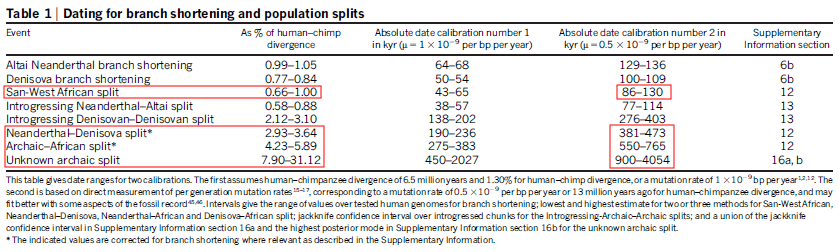
The study makes two age estimates, one based on a very conservative and truly unbelievable Pan-Homo split date of 6.5 Ma BP and the other based on observed per generation mutation rates, which happens to be perfectly coincident with a Pan-Homo split of 13 Ma BP, the oldest extreme of Langergraber's estimate. This coincidence alone is of enough relevance for all molecular clock approaches, because it effectively demands the doubling of all age estimates based on the ridiculously short 6.5 Ma Pan-Homo split supposition. 

Red outlines are mine. Click to enlarge.

It also produces a semi-reasonable San-West African age estimate of c. 86-130 Ka, although I would think it a bit older in fact or at the very least at the top end. This highlights the severe difficulties of such molecular clock estimates, because a 4 Ma divergence between the alleged introgressing mystery archaic in the Denisovan genome, seems out of the question according on the archaeological and paleontological record, which only documents Homo species since c. 2 Ma ago, half that time (within the estimate but clearly very far from the top end).


Altai Neanderthal inbreeding

An important finding of this study is that the studied individual was extremely inbred, with parents in effective relationship comparable to that of grandparent and grandchild or half siblings. This inbreeding tendency, even if extreme, is not so strange in populations that have experienced founder effect bottlenecks and small population sizes. The Denisovan and the modern human Karitiana people are not so extreme but range in the lower end of double first cousins level of genetic relationship between the parents. Other Native Americans like the Mixe are close to that range, while the other compared populations, Papuans and Sardinians, show much lower levels of inbreeding.

Whatever we may think of Altai Neanderthal inbreeding, their drift parameter is still very low when compared with European Neanderthals. This is not discussed in the paper but such extreme drift also seems to imply extreme inbreeding issues in European Neanderthals, even if these may have other causes such as an extremely strong founder effect or whatever.

Bonobo-specific segments were removed, so the bonobo position is not realistic.


Inferred population history

Both populations leading to the Altai Neanderthal and Denisovans, but not modern humans, appear to have gone through a strong decline in population size since hundreds of millennia ago. The Denisovan decline seems to begin c. 800 Ka ago while the Neanderthal one may have begun c. 500 Ka ago. While this is coincident with a general expansion of the H. sapiens branch (still undifferentiated in Africa), peaking around c. 250 Ka ago before differentiation and relative decline. In their words:
All genomes analysed show evidence of a reduction in population size that occurred sometime before 1.0 million years ago. Subsequently, the population ancestral to present-day humans increased in size,whereas the Altai and Denisovan ancestral populations decreased further in size. It is thus clear that the demographic histories of both archaic populations differ substantially from that of present-day humans.


Neanderthal and Denisovan admixture in modern humans

The new tests confirm in essence the previous findings: there is significant Neanderthal introgression in modern humans descending from the migrants out of Africa and there is also significant Denisovan one among Australasian populations.


Additionally and with some caution, the authors think that much lesser Denisovan introgression (of around 0.2%) is found among East Asians and that these, as well as Native Americans, show slightly more Neanderthal admixture than West Eurasians. In my understanding this may be caused by minor African flow to West Eurasia after the admixture event (and/or residual "First Arabian" persistence) and I would think that measuring South Asians would help to clarify this issue (because African admixture is negligible in the subcontinent but they are also distinct from East Asians).

These measurements are so weak that the authors agree to all kind of cautions about them in any case.

In addition to all this, the supplemental material (section 13) also detects tiny, almost homeopathic, amounts of Neanderthal gene flow to Yorubas (~0.02%), obviously mediated by H. sapiens backflow from Asia and Europe into parts of Africa, which eventually influenced other African populations. An even more diluted amount may also be present among the Mbuti Pygmies.


Altai Neanderthal admixture in Denisovans

This issue is not really explained in the paper as such, and we have to reach out to the Supplemental Information chapter 15 in order to grasp it.

It is clear that the Altai Neanderthals are closer to Denisovans than other Neanderthals are by approx. the following fractions (directly deduced from the raw affinities listed in fig. S6a.2):
  • 2% more than Mezhmaiskaya
  • 7% more than Vindija (avg.)
  • 9% more than El Sidrón
Feldhofer appears closer instead but this sequence was not used by the authors in most tests because it has too dubious quality.

In section 15 of the supplementary material, using complex methodology and lamenting the lack of a second Denisovan sample which would be most useful, they estimate a minimal 0.5% (Altai) Neanderthal introgression in Denisovans, with strong warnings that this could well be quite higher. I don't know why they are not even considering a more direct approach, but I would dare to guesstimate the introgression to be close to 8% from the above raw data, assuming that there are no further complexities at play, such as other Heidelbergensis introgression in European Neanderthals, etc. The drift parameter (see above) does not seem to be one such complexity because Mezhmaiskaya is almost as drifted as Vindija yet it is consistently much closer, as it seems to correspond to its specific relatedness to Altai Neanderthals in mtDNA (and possibly also in nDNA if it is admixture what causes their pseudo-tree positioning closer to the root, what would be typical).

Note in blue is mine.


Mystery archaic genetic flow into Denisovans

The authors find that some 0.5-8% of the Denisovan genome appears to come from another hominin, which split from the human trunk even earlier.
We caution that these analyses make several simplifying assumptions. Despite these limitations, we show that the Denisova genome harbors a component that derives from a population that lived before the separation of Neanderthals, Denisovans and modern humans. This component may be present due to gene flow, or to a more complex population history such as ancient population structure maintaining a larger proportion of ancestral alleles in the ancestors of Denisovans over hundreds of thousands of years.

Later in the discussion section they ponder further the implications of this finding:
The evidence suggestive of gene flow into Denisovans from an unknown hominin is interesting. The estimated age of 0.9 to 4 million years for the population split of this unknown hominin from the modern human lineage is compatible with a model where this unknown hominin contributed its mtDNA to Denisovans since the Denisovan mtDNA diverged from the mtDNA of the other hominins about 0.7–1.3 million years ago41. The estimated population split time is also compatible with the possibility that this unknown hominin was what is known from the fossil record as Homo erectus. This group started to spread out of Africa around 1.8 million years ago42, but Asian and African H. erectus populations may have become finally separated only about one million years ago43. However, further work is necessary to establish if and how this gene flow event occurred.

Going to the detail of the matter (i.e. supplemental material sections 16a and 16b), one of the key details is that present-day Africans share more derived alleles with Neanderthals than with Denisovans. This can only be explained because Denisovans have other archaic ancestry prior to their apparent divergence from Neanderthals or (what is about the same) because Denisovans diverged themselves prior to the Neanderthal-Sapiens split, what is what the mtDNA (unlike the nDNA) suggests. However the difference, even if consistent across comparisons, is too small (a few percentage points) to be attributed to the later scenario.

This means that Denisovans appear to be at nDNA level some sort of an independent branch of proto-Neanderthals with some other but minor archaic admixture. Instead at mtDNA level they appear to be unrelated to Neanderthals and related instead to H. heidelbergensis (a detail not discussed in this paper because it is a too recent independent discovery).

There are still many details to explore but, in principle, it would seem that the Denisovan branch appears to be a divergent proto-Neanderthal one (maybe related to the Hathnora hominin, which looks very much Neanderthal) with lesser other archaic (H. heidelbergensis?) admixture, which nevertheless remained prominent in their mtDNA for whatever accidental reason.

Whether the H. heidelbergensis population of Atapuerca responds to this same profile (i.e. they were Denisovans too) or belongs instead to the "other archaic" population which introgressed in the Denisovan genome remains to be solved. So far we only know the mitochondrial lineage and this one may be misleading, as seems to be the case with the Denisova hominin.

Note in red is mine


Modern human genetic evolution

Benefiting from the high quality of the archaic genomes of Altai, the authors cataloged a long list of simple mutations exclusive to our species: 31,389 single nucleotide substitutions and 4,113 short insertions and deletions (indels). Additionally they found other 105,757 substitutions and 3,900 indels shared by 90% of their modern human sample of 1094 individuals.

They suggest some lines for future research in this regard, maybe focusing on genes known to influence brain development or regions that could show signs of positive selection. These preliminary lines of research are explored in SI-20, noticing potential selection in genes that affect the ventricular zone of the brain and cell proliferation in fetal brain development.

December 5, 2013

The Denisovans were not alone

H. heidelbergensis from Atapuerca
Cranium 5 "Miguelón"
(CC by José Manuel Benito)
About half an hour ago, somewhat cryptic comments in this blog and my email woke me up, more abruptly than I would have desired maybe, to a new game-breaking finding: researchers have sequenced the mtDNA of a 400,000 years old Homo heidelbergensis from Atapuerca (Iberian Peninsula, Europe) and it was not at all like most would have expected.

Mathhias Mayer et al., A mitochondrial genome sequence of a hominin from Sima de los Huesos. Nature 2013. Pay per viewLINK [doi:10.1038/nature12788]

Abstract

Excavations of a complex of caves in the Sierra de Atapuerca in northern Spain have unearthed hominin fossils that range in age from the early Pleistocene to the Holocene1. One of these sites, the ‘Sima de los Huesos’ (‘pit of bones’), has yielded the world’s largest assemblage of Middle Pleistocene hominin fossils2, 3, consisting of at least 28 individuals4 dated to over 300,000 years ago5. The skeletal remains share a number of morphological features with fossils classified as Homo heidelbergensis and also display distinct Neanderthal-derived traits6, 7, 8. Here we determine an almost complete mitochondrial genome sequence of a hominin from Sima de los Huesos and show that it is closely related to the lineage leading to mitochondrial genomes of Denisovans9, 10, an eastern Eurasian sister group to Neanderthals. Our results pave the way for DNA research on hominins from the Middle Pleistocene.


The key figure is this one, which phylogenetically relates the newly sequenced mtDNA with the known Homo ones:


Figure 4: Bayesian phylogenetic tree of hominin mitochondrial relationships based on the Sima de los Huesos mtDNA sequence determined using the inclusive filtering criteria.
All nodes connecting the denoted hominin groups are supported with posterior probability of 1. The tree was rooted using chimpanzee and bonobo mtDNA genomes. The scale bar denotes substitutions per site.


It has been argued by all sides (myself included) that the H. heidelbergensis of Atapuerca and other European locations are ancestral to Neanderthals. Some say that also to H. sapiens, while others argue that ours is a wholly distinct line, derived from H. rhodesiensis, and yet others claim that H. rhodesiensis is not different from H. heidelbergensis in spite of being older and rooted, it seems, in South Africa.

The clear evidence for migrations out of Africa, before our species, is limited to two periods: (1) the c. 1.8 Ma old migration of H. erectus/georgicus with Olduwayan technology (mode 1, "choppers"), and (2) the c. 1 Ma old migration of H. ergaster/antecessor (sometimes also confusingly called H. erectus) with Acheulean technology (mode 2, typically "hand axes"). Archaeological evidence for later migrations does not exist.

See: Late human evolution maps at Leherensuge.

So we could well ask, if H. heidelbergensis is not ancestral to Neanderthals, then where do Neanderthals come from?

It must be answered that we do not know yet if H. heidelbergensis is or not ancestral to Neanderthals or in what degree it is. The mitochodrial (maternal) lineage may well be misleading in this sense. Denisovans themselves were much more related to Neanderthals via autosomal (nuclear) DNA than the mtDNA, so it may also be the case with European Heidelbergensis.

In fact it is still possible that these individuals represent some sort of admixture between older and newer layers of human expansion. But there is no clear answer yet. What is clear is that no Neanderthals have these mitochondrial sequences but others closer to those of H. sapiens - and this is the most puzzling part in fact. 

But one thing is clear: the World is much bigger than just Europe, and that was also the case back in Paleolithic times. Our answer may well lay under the sands of some tropical desert, the waters of the sea or whatever other place in Asia or Africa.

Even if we'd find the "missing link", so to say, we might not be able to discern it as such without genetic sequencing and that is often not even possible at all. However this pioneer research, as well as its precursors on a bear also from Atapuerca and a 700,000 years old horse (the true record of ancient DNA recovery), give us some hope of getting an improved, even if sometimes perplexing, understanding of the complexity of the human adventure.

August 28, 2013

"Modern human behavior" is out, generic human potential is in

There is a hypothetical model in Prehistory on something vague and ethereal which has been called "Modern human behavior" (MHB). It's not about nuclear weapons, Internet addiction nor commuting to work; it's not either about the printing machine, the Industrial Revolution and the ideals of Human Rights; it's not even about farming, living in cities and through sailing the seas... it's about something extremely vague and ill-defined but which, by definition would set apart "modern humans" (H. sapiens) from "archaic humans" (other Homo species, particularly Neanderthals).

While it is almost intangible and every day more dubious, a large number of prehistorians, some as notorious as Mellars, Stringer or Bar-Yosef, strikingly influenced by religious ideas setting an arbitrarily absolutist line between "humans" (i.e. Homo sapiens) and the rest (including other humans), have insisted for decades on the validity of such notion. Now three researchers challenge the model radically:

Christopher J. H. James, Julien Riel-Salvatore & Benjamin R. Collins, Why We Need an Alternative Approach to the Study of Modern Human Behaviour. Canadian Journal of Archaeology Volume 37, Issue 1 (2013). Pay per viewLINK


They essentially argue that: that the model (of which there are several, often contradictory variants) is extremely useless and confusing, that there are "archaic humans" with many or even all traits of MHB and there are "modern humans" without many or even most of them.

They tentatively argue for a throughout revision of the model but then they seem to lean rather for the whole abandonment of the idea suggesting instead a mosaic and punctuated evolution pattern that is socio-cultural rather than merely genetic or essentialist:

(...) the rapidly accumulating evidence for a mosaic pattern of behavioural change (...) and the evidence of behavioural advances appearing and rapidly disappearing in the MSA, make the harsh dichotomy model untenable. What it does suggest is a punctuated or saltation model that led to widespread adoption of more complex behavioural patterns once the demographic circumstances were appropriate (...).

Somehow this made me recall one of my all-time favorite bands: Suicidal Tendencies and their 1990 hit "Disco's out, murder's in" (surely not apt for pop, techno and folk music lovers):

May 29, 2013

Neanderthals weaned their babies between 9 and 18 months of age

Or at least one of them did. 

The finding is the product of detailed analysis of milk tooth formation in one infant Neanderthal from Scladina cave (Belgium) and comparison with many monkey teeth. The researchers concluded that the barium accumulation in the teeth correlates tightly with breastfeeding and gives information on this with almost a day of precision.

This Neanderthal kid was exclusive breastfed up to the age of nine months and then had another nine months of gradual weaning, eating also other foods, as well as its mother's milk. 

This is probably much more than the average breastfeeding in our modern societies but less than it has been documented among some hunter-gatherers like Bushmen, who may well partly breastfeed their children for up to four years, what acts as (unsafe) contraceptive. Chimpanzees seem to breastfeed their infants for some 5.3 years, while non-civilized humans (H. sapiens) have ranges of around 2.4 years instead.

Sources: Science Daily, Paleorama[es].

Ref. Christine Austin, Tanya M. Smith, Asa Bradman, Katie Hinde, Renaud Joannes-Boyau, David Bishop, Dominic J. Hare, Philip Doble, Brenda Eskenazi, Manish Arora. Barium distributions in teeth reveal early-life dietary transitions in primates. Nature, 2013; DOI: 10.1038/nature12169

May 17, 2013

Echoes from the past (May 17 2013)

Some interesting news I cannot dedicate much effort to:


Human intelligence not really linked to frontal lobe.

New research highlights that the human frontal lobe is not oversized in comparison with other animals. Instead the human intelligence seems to be distributed through all the brain, being the network what really matters → Science Daily

Ref. Robert A. Barton and Chris Venditti. Human frontal lobes are not relatively large. PNAS, May 13, 2013 DOI: 10.1073/pnas.1215723110
 

Early hominin ear bones found together in South Africa.

The three bones, dated to c. 1.9 Ma show intermediate features between modern humans and apes → PhysOrg.


New hominin site in Hunan (China).

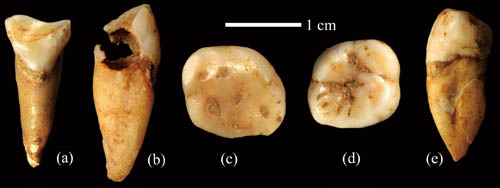
The sediments of Fuyan cave, in which five human teeth (Homo erectus?) were found, along with plenty of animal ones, are dated to 141,700 (±12,100) years ago. → IVPP - Chinese Academy of Sciences.

The five human teeth


Neanderthal workshop found in Poland.

In Pietrowice Wielkie (Silesia), which is at the end of a major natural corridor from the Danubian basin → PAP.


Ancient Eastern Europeans ritually killed their pets to become warriors.

In the Bronze Age site of Krasnosamarkskoe (Volga region, Russia) more than 50 ritually pieced skulls of dogs have puzzled archaeologists, who have reached the conclusion, after researching Indoeuropean accounts from India, that the animals may have been killed in adulthood rituals: the boys who were to become warriors had to kill their most beloved pet in order to be accepted as such, and did so in a precise and macabre ritual → National Geographic.


Ancient log boat found in Ireland.

In the Boyne river, which was in the past a major artery of the island. Not yet dated: it could be from prehistoric times or the 18th century. → Irish Times.