Showing posts with label China. Show all posts

August 21, 2016

Mitochondrial DNA of ancient Tocharians

Quickies

It seems there is still something to learn about the ancient Tocharian mummies of Uyghuristan:

Chunxiang Li et al., Analysis of ancient human mitochondrial DNA from the Xiaohe cemetery: insights into prehistoric population movements in the Tarim Basin, China. BMC Genetics 2016. Open accessLINK [doi:10.1186/s12863-015-0237-5]

Abstract

Background

The Tarim Basin in western China, known for its amazingly well-preserved mummies, has been for thousands of years an important crossroad between the eastern and western parts of Eurasia. Despite its key position in communications and migration, and highly diverse peoples, languages and cultures, its prehistory is poorly understood. To shed light on the origin of the populations of the Tarim Basin, we analysed mitochondrial DNA polymorphisms in human skeletal remains excavated from the Xiaohe cemetery, used by the local community between 4000 and 3500 years before present, and possibly representing some of the earliest settlers.

Results

Xiaohe people carried a wide variety of maternal lineages, including West Eurasian lineages H, K, U5, U7, U2e, T, R*, East Eurasian lineages B, C4, C5, D, G2a and Indian lineage M5.

Conclusion

Our results indicate that the people of the Tarim Basin had a diverse maternal ancestry, with origins in Europe, central/eastern Siberia and southern/western Asia. These findings, together with information on the cultural context of the Xiaohe cemetery, can be used to test contrasting hypotheses of route of settlement into the Tarim Basin.


February 14, 2016

Neolithic East Asians tamed leopard cats

Quickies

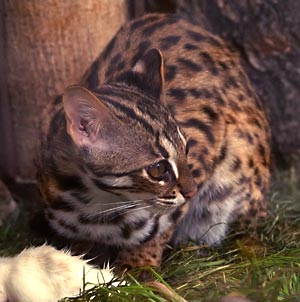
Leopard cat
(CC: F. Spangenberg - Der Irbis)
It's hard to say that cats are domestic at all, tamed is probably a better concept. Some would of course argue that it is cats who have tamed us humans, debatable I guess.

In any case this relationship has not been restricted to the common cat (Felis silvestris catus) but it has been known now that ancient East Asians managed to establish the same kind of relationship with a local feline of similar characteristics: the leopard cat (Prionailurus bengalensis). However at some point the Western cat took over and nothing remains of that ancient domestication event.

Jean-Denis Vigne et al., Earliest “Domestic” Cats in China Identified as Leopard Cat (Prionailurus bengalensis). PLoS ONE 2015. Open access → LINK [doi:10.1371/journal.pone.0147295]

Abstract

The ancestor of all modern domestic cats is the wildcat, Felis silvestris lybica, with archaeological evidence indicating it was domesticated as early as 10,000 years ago in South-West Asia. A recent study, however, claims that cat domestication also occurred in China some 5,000 years ago and involved the same wildcat ancestor (F. silvestris). The application of geometric morphometric analyses to ancient small felid bones from China dating between 5,500 to 4,900 BP, instead reveal these and other remains to be that of the leopard cat (Prionailurus bengalensis). These data clearly indicate that the origins of a human-cat ‘domestic’ relationship in Neolithic China began independently from South-West Asia and involved a different wild felid species altogether. The leopard cat’s ‘domestic’ status, however, appears to have been short-lived—its apparent subsequent replacement shown by the fact that today all domestic cats in China are genetically related to F. silvestris.

An archaic human population surviving in SW China until at least 14,000 years ago

Quickies

Just a femur but looks like it. Homo heidelbergensis (Denisovan)?

Darren Curnoe, Xueping Li et al. A Hominin Femur with Archaic Affinities from the Late Pleistocene of Southwest China. PLoS ONE 2015. Open accessLINK [doi:10.1371/journal.pone.0143332]

Abstract

The number of Late Pleistocene hominin species and the timing of their extinction are issues receiving renewed attention following genomic evidence for interbreeding between the ancestors of some living humans and archaic taxa. Yet, major gaps in the fossil record and uncertainties surrounding the age of key fossils have meant that these questions remain poorly understood. Here we describe and compare a highly unusual femur from Late Pleistocene sediments at Maludong (Yunnan), Southwest China, recovered along with cranial remains that exhibit a mixture of anatomically modern human and archaic traits. Our studies show that the Maludong femur has affinities to archaic hominins, especially Lower Pleistocene femora. However, the scarcity of later Middle and Late Pleistocene archaic remains in East Asia makes an assessment of systematically relevant character states difficult, warranting caution in assigning the specimen to a species at this time. The Maludong fossil probably samples an archaic population that survived until around 14,000 years ago in the biogeographically complex region of Southwest China.

October 15, 2015

More evidence supporting very old colonization of Asia by H. sapiens

Quickies

Quite worth mentioning:

Wu Liu et al., The earliest unequivocally modern humans in southern China. Nature 2015. Pay per viewLINK [doi:10.1038/nature15696]

Abstract

The hominin record from southern Asia for the early Late Pleistocene epoch is scarce. Well-dated and well-preserved fossils older than ~45,000 years that can be unequivocally attributed to Homo sapiens are lacking1, 2, 3, 4. Here we present evidence from the newly excavated Fuyan Cave in Daoxian (southern China). This site has provided 47 human teeth dated to more than 80,000 years old, and with an inferred maximum age of 120,000 years. The morphological and metric assessment of this sample supports its unequivocal assignment to H. sapiens. The Daoxian sample is more derived than any other anatomically modern humans, resembling middle-to-late Late Pleistocene specimens and even contemporary humans. Our study shows that fully modern morphologies were present in southern China 30,000–70,000 years earlier than in the Levant and Europe. Our data fill a chronological and geographical gap that is relevant for understanding when H. sapiens first appeared in southern Asia. The Daoxian teeth also support the hypothesis that during the same period, southern China was inhabited by more derived populations than central and northern China. This evidence is important for the study of dispersal routes of modern humans. Finally, our results are relevant to exploring the reasons for the relatively late entry of H. sapiens into Europe. Some studies have investigated how the competition with H. sapiens may have caused Neanderthals’ extinction (see ref. 8 and references therein). Notably, although fully modern humans were already present in southern China at least as early as ~80,000 years ago, there is no evidence that they entered Europe before ~45,000 years ago. This could indicate that H. neanderthalensis was indeed an additional ecological barrier for modern humans, who could only enter Europe when the demise of Neanderthals had already started.

When asked in private correspondence earlier today what did I think of this, I replied that María Martinón (second listed author) is a top expert in tooth morphology and that, if she says they are unmistakably H. sapiens, I have to believe it. 

I also replied a bit more extensively that this should be no surprise, that evidence in favor of a c. 100 Ka BP migration of H. sapiens into South and Southeast Asia has been piling up for some time already. Some of the most important pieces of evidence are the Zhirendong jaw (also from Southern China, dated to c. 100 Ka BP) and the African-like Katoati toolkits (NW India, dated to c. 96 Ka BP). These dates are roughly coincident with the end of the Abbassia Pluvial (c. 125-90 Ka BP), which is in turn coincident with the period of evidence for earliest H. sapiens presence in Arabia and Palestine. 

In other words, our ancestors crossed into Arabia and Palestine (and maybe other less well documented nearby regions of West Asia) around 125 millennia ago (with a second wave c. 90 Ka ago). The Neanderthal admixture episode probably happened soon after. Then they moved to South and SE Asia, quite possibly pressed by growingly arid conditions in Arabia, and this second migration took place around 100 millennia ago (earlier is not yet supported but can't be fully discarded). 

All this has major implications for molecular clock calibration, of course: mtDNA L3 should be c. 125 Ka old and M some 100 Ka old, similarly Y-DNA CF should be around 100 Ka old as well. This is the kind of stuff that makes genetics-oriented people skeptic but the molecular clock is a mere educated hunch, while the archaeological data is serious evidence that cannot be ignored.

June 11, 2014

China and Mexico go open access

In China the Academy of Science has made compulsory to deposit research in open access publications 12 months after the original publication in a pay per view one. In Mexico new legislation will affect in the same way to all studies partly financed by public funds. 

Via BMC newsletter.


December 15, 2013

Ancient East Asian Y-DNA maps

I'm fusing here data from two different and complementary sources:
  • Hui Li et al. Y chromosomes of prehistoric people along the Yangtze River. Human Genetics 2007. → LINK (PDF) [doi:10.1007/s00439-007-0407-2]
  • A 2012 study integrally in Chinese (so integrally that I don't even know who the authors are → LINK) but whose content was discussed in English (after synthetic translation) at Eurogenes blog. I deals with a variety of ancient Y-DNA from the Northern parts of P.R. China.

Update (Dec 25): much of the Northeastern aDNA is also discussed in an English language study (h/t Kristiina):

Yinqiu Cui et al. Y Chromosome analysis of prehistoric human populations in the West Liao River Valley, Northeast China. BMC 2013. Open access LINK [doi:10.1186/1471-2148-13-216]


    Combining the data from both sources, I produced the following maps:


    Neolithic (before ~4000 BP):


    Metal Ages (after ~4000 BP):


    Discussion

    I find particularly interesting the first map because it outlines what seem to be three distinct ethnic (or at the very least genetic) regions in the Neolithic period:
    • A Central-South region dominated by O3
    • An Eastern area around modern Shanghai dominated by O1
    • A Northern region dominated by N
    Later on, in the Metal Ages, a colonization of the North/NE by these O3 peoples seems apparent, followed, probably at a later time, by a colonization of the West (Taojiazhai).

    We do not have so ancient data for the West but we can still see a diversity of lineages, notably Q (largely Q1, if not all), C (most likely C3, also in the NE) and N (also in the NE). While the arrival of O3 to this area was probably late, the arrival of R1a1a is quite old, however it is still almost certainly related to the first Indoeuropean migrations eastwards, which founded the Afanasevo culture in the area of Altai.

    I find also very interesting the presence, with local dominance often, of N (including an instance of N1c) and Q in the Northern parts of P.R. China, because these lineages are now rather uncommon but are still dominant in Northern Asia, Northeastern Europe and Native America. The fact that they were still so important in the Northern Chinese frontier in the Neolithic and even in the Metal Ages should tell us something about their respective histories and, in the case of N, origins as well.

    It is also notable that no D was detected anywhere. However the regions with greatest D frequencies like Tibet, Yunnan or Japan were not studied.


    September 9, 2013

    Homo sapiens was in China before 100,000 years ago!

    This finding consolidates the recent dating of African-like industries of India to c. 96,000 years ago, as well as other previous discoveries from mostly China, and, jointly, they totally out-date not just the ridiculous "60 Ka ago" mantra for the migration out-of-Africa (which we know is dated to c. 125,000 years ago in Arabia and Palestine) but also the previous estimates of c. 80,000 years ago for India (Petraglia 2007).

    Guanjung Shen et al., Mass spectrometric U-series dating of Huanglong Cave in Hubei Province, central China: Evidence for early presence of modern humans in eastern Asia. Journal of Human Evolution, 2013. Freely accessible at the time of writing thisLINK [doi:10.1016/j.jhevol.2013.05.002]

    Abstract

    Most researchers believe that anatomically modern humans (AMH) first appeared in Africa 160-190 ka ago, and would not have reached eastern Asia until ∼50 ka ago. However, the credibility of these scenarios might have been compromised by a largely inaccurate and compressed chronological framework previously established for hominin fossils found in China. Recently there has been a growing body of evidence indicating the possible presence of AMH in eastern Asia ca. 100 ka ago or even earlier. Here we report high-precision mass spectrometric U-series dating of intercalated flowstone samples from Huanglong Cave, a recently discovered Late Pleistocene hominin site in northern Hubei Province, central China. Systematic excavations there have led to the in situ discovery of seven hominin teeth and dozens of stone and bone artifacts. The U-series dates on localized thin flowstone formations bracket the hominin specimens between 81 and 101 ka, currently the most narrow time span for all AMH beyond 45 ka in China, if the assignment of the hominin teeth to modern Homo sapiens holds. Alternatively this study provides further evidence for the early presence of an AMH morphology in China, through either independent evolution of local archaic populations or their assimilation with incoming AMH. Along with recent dating results for hominin samples from Homo erectus to AMH, a new extended and continuous timeline for Chinese hominin fossils is taking shape, which warrants a reconstruction of human evolution, especially the origins of modern humans in eastern Asia.

    The range of dates for the teeth is ample but the oldest one is of 102.1 ± 0.9 Ka ago. Other dates are very close to this one: 99.5 ± 2.2, 99.3 ± 1.6, 96.8 ± 1.0, etc. (see table 1), so there can be little doubt about their accuracy. 

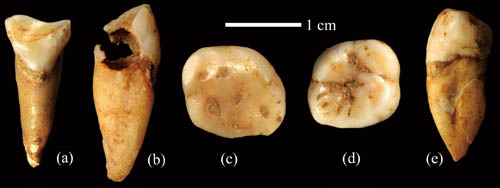
    The Huanglong teeth (various views)
     
    Now, how solidly can these teeth be considered to belong to the species Homo sapiens? Very solidly it seems:
    The seven hominin teeth from Huanglong Cave have been assigned to AMH mainly because of their generally more advanced morphology than that of H. erectus and other archaic populations (Liu et al., 2010b), especially in terms of the crown breath/length index. These teeth also lack major archaic suprastructural characteristics listed by Bermúdez de Castro (1988) for eastern Asian mid-Pleistocene hominins, such as “strong tuberculum linguale (incisors), marked lingual inclination of the buccal face (incisors and canines), buccal cingulum (canines and molars), wrinkling (molars), taurodontism (molars), swelling of the buccal faces (molars)” (Tim Compton, Personal communication). However, in their roots, these teeth still retain a few archaic features, being more robust and complicated than those of modern humans (Liu et al., 2010b).

    Zhirendong jaw
    Let's not forget that further South in China, in Zhirendong, a "modern" jaw was found and dated to c. 100,000 years ago as well.

    As for the so-called "molecular clock":
    The new timeline for human evolution in China is in disagreement with the molecular clock that posits a late appearance for AMH in eastern Asia (e.g., Chu et al., 1998).

    ... too bad for the "clock", because a clock that doesn't inform us of time with at least some accuracy is totally useless.
     

    July 25, 2013

    A review of haplogroup N (Y-DNA)

    Haplogroup N (Y-DNA) is spread from the Baltic to the South China Sea being one of those rare genetic links between East and West Eurasia (other than ultimate common ancestry) and one of the two Y-DNA lineages which expanded across the Northern Eurasian continent (the other one being Q).

    While it is apparent to me and many others that the lineage originated in East Asia and expanded first Northwards to Siberia and later Westwards to Europe. I have found sometimes reluctance to accept this fact or difficulty understanding why. Some of the data of this paper may be of help in this regard. It is also a good exercise for those learning to understand how haploid genetics can be decoded into a meaningful pattern that reveals key parts of the untold history of peoples. 

    Hong Shi et al., Genetic Evidence of an East Asian Origin and Paleolithic Northward Migration of Y-chromosome Haplogroup N. PLoS ONE 2013. Open access → LINK [doi:10.1371/journal.pone.0066102]

    Abstract

    The Y-chromosome haplogroup N-M231 (Hg N) is distributed widely in eastern and central Asia, Siberia, as well as in eastern and northern Europe. Previous studies suggested a counterclockwise prehistoric migration of Hg N from eastern Asia to eastern and northern Europe. However, the root of this Y chromosome lineage and its detailed dispersal pattern across eastern Asia are still unclear. We analyzed haplogroup profiles and phylogeographic patterns of 1,570 Hg N individuals from 20,826 males in 359 populations across Eurasia. We first genotyped 6,371 males from 169 populations in China and Cambodia, and generated data of 360 Hg N individuals, and then combined published data on 1,210 Hg N individuals from Japanese, Southeast Asian, Siberian, European and Central Asian populations. The results showed that the sub-haplogroups of Hg N have a distinct geographical distribution. The highest Y-STR diversity of the ancestral Hg N sub-haplogroups was observed in the southern part of mainland East Asia, and further phylogeographic analyses supports an origin of Hg N in southern China. Combined with previous data, we propose that the early northward dispersal of Hg N started from southern China about 21 thousand years ago (kya), expanding into northern China 12–18 kya, and reaching further north to Siberia about 12–14 kya before a population expansion and westward migration into Central Asia and eastern/northern Europe around 8.0–10.0 kya. This northward migration of Hg N likewise coincides with retreating ice sheets after the Last Glacial Maximum (22–18 kya) in mainland East Asia.

    Hong Shi has previously produced very interesting materials and this is no exception, however I find the use of chronological guesstimates as if these would be objective findings and treated as part of the central discourse (and not the mere side note where they belong) a bit nauseating and a cause of confusion.
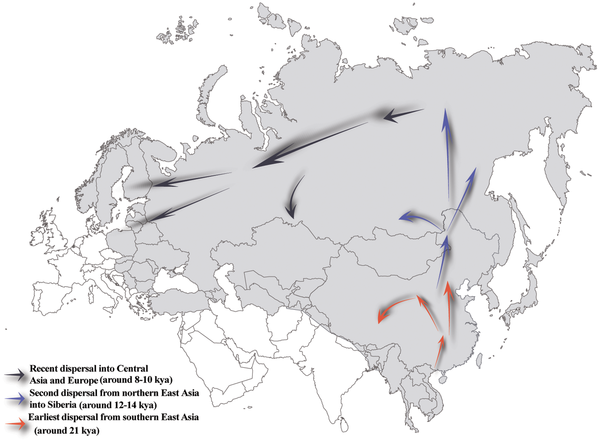
    Figure 4. Proposed prehistoric migration routes for Hg N lineage.
    (the pattern is correct but the dates are mere hunches, not any sort of objective facts)

    Above we can see the reconstructed pattern of expansion of Y-DNA N in three phases. In my understanding the dates are not way off, although I can only imagine that there is still room for improvement, especially regarding the "red" phase. After all NO may have split c. 60 Ka ago and the main branch, O, c. 50 Ka BP - and not the mere 25-30 Ka that Shi calculated (in a previous study but mentioned again here).

    But the really interesting part is not molecular-clock-o-logy but this:
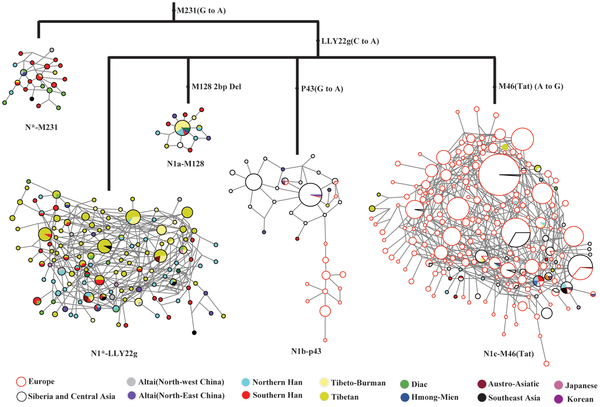
    Figure 3. Median-joining networks for sub-haplogroups of Hg N lineage using Y-STR alleles.
    The diagnostic mutations used to classify the sub-haplogroups are labeled on the tree branches. Each node represents a haplotype and its size is proportional to the haplotype frequency, and the length of a branch is proportional to the mutation steps. The colored areas indicate the geographic origins of the studied populations or language groups.

    Here we can appreciate, with the labyrinthine limitations of the use of (too few?) STR markers, the apparent structure of the various haplogroups and paragroups under N. We can also see the STR diversity in numerical terms:
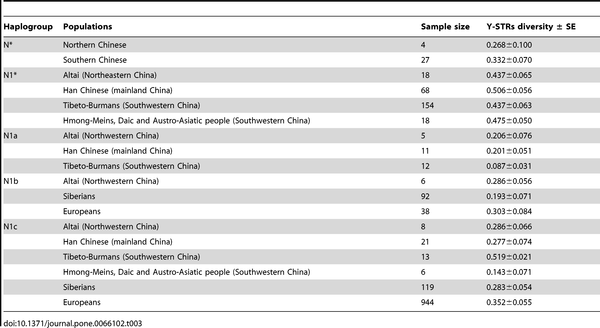
    Table 3. Y-STRs diversity of Hg N sub-haplogroups.

    Sadly the category "Han Chinese" is almost useless and one wonders why Shi et al. changed from the North/South polarity in the key paragroup N* to such a confusing terminology in N1.

    In any case, it is quite evident that N arose in South China, spread, already as N1 to NE Asia and, later, some of that N1 (N1c mostly but also some N1b) spread Westwards reaching to Finland and other Eastern European populations. In the haplotype graph we can appreciate a distinct European-specific branch within N1b.


    Update (Jul 28): some new findings (not considered in the study) and updated nomenclature.

    See comments' section for greater details. Special thanks to Palamede for his efforts in clarifying the matter.

    Commercial testing company FTDNA has recently detected some new markers within haplogroup N1 that alter the phylogeny. A synthesis of these findings can be seen in this graph.

    This new nomenclature was adopted by ISOGG but the study discussed here does not include it, using instead a 2011 nomenclature. Hence we must understand that:
    • N* and N1* remain as such
    • "N1a" (M128) is now known as N1c2a
    • "N1b" (P43) is now N1c2b
    • "N1c" (M46/Tat) is now N1c1
    Therefore the N1 tree splits as:
    • N1a (new clade, P189)
    • N1b (new clade, L732)
    • N1c (new clade including all previously named subhaplogroups)
      • N1c1 (M46/Tat, former N1c)
      • N1c2 (new clade, L666)
        • N1c2a (M128, former N1a)
        • N1c2b (P43, former N1b)
     
    As far as I could gather, N1(xN1c) is so far only clearly represented by two FTDNA-tested singletons: a Slovakian (N1a) and someone of Polish surname (N1b1). However I may be missing some details. Whatever the case it is possible that, unless more samples show up in these groupings the tree may be later reverted to the original state (or something in between) because isolated individuals or families do not haplogroups make. 

    Also it is important to understand that commercial DNA testing companies have very unbalanced samples, clearly dominated by people of NW European (and to lesser extent other European) ancestry, what is not too useful when discerning what is where, producing sometimes the false impression of greater European diversity just because of greater number of samples.

    On the other, hand the Hong Shi data reported above clearly shows a great number (and diversity) of East Asians within N1*, so the most likely conclusion is that the few Europeans within N1* are mere erratics within clades of East Asian origin, surely brought Westward by the overall N1 tide. 

    So in essence the conclusions of the paper remain unchallenged.

    July 17, 2013

    Homo sapiens from Central China dated to 81-101 Ka BP

    I just received notice (h/t David) of this most important finding and dating:

    Guanjun Shen et al., Mass spectrometric U-series dating of Huanglong Cave in Hubei Province, central China: Evidence for early presence of modern humans in eastern Asia. Journal of Human Evolution 2013. Pay per viewLINK [doi:10.1016/j.jhevol.2013.05.002]

    Abstract

    Most researchers believe that anatomically modern humans (AMH) first appeared in Africa 160-190 ka ago, and would not have reached eastern Asia until ∼50 ka ago. However, the credibility of these scenarios might have been compromised by a largely inaccurate and compressed chronological framework previously established for hominin fossils found in China. Recently there has been a growing body of evidence indicating the possible presence of AMH in eastern Asia ca. 100 ka ago or even earlier. Here we report high-precision mass spectrometric U-series dating of intercalated flowstone samples from Huanglong Cave, a recently discovered Late Pleistocene hominin site in northern Hubei Province, central China. Systematic excavations there have led to the in situ discovery of seven hominin teeth and dozens of stone and bone artifacts. The U-series dates on localized thin flowstone formations bracket the hominin specimens between 81 and 101 ka, currently the most narrow time span for all AMH beyond 45 ka in China, if the assignment of the hominin teeth to modern Homo sapiens holds. Alternatively this study provides further evidence for the early presence of an AMH morphology in China, through either independent evolution of local archaic populations or their assimilation with incoming AMH. Along with recent dating results for hominin samples from Homo erectus to AMH, a new extended and continuous timeline for Chinese hominin fossils is taking shape, which warrants a reconstruction of human evolution, especially the origins of modern humans in eastern Asia.

    In other words: strong material evidence is quickly piling up in favor of a Homo sapiens "fast" colonization of Southern Asia (and as far NE as Hubei!) around 100 or at least 90 Ka BP. 


    See also:

    June 8, 2013

    Sago trees were important in Neolithic Guangxi

    What did SE Asians eat before the spread of rice farming?

    Xiaoyan Yang et al., Sago-Type Palms Were an Important Plant Food Prior to Rice in Southern Subtropical China. PLoS ONE 2013. Open accessLINK [doi:10.1371/journal.pone.0063148]

    Abstract

    Poor preservation of plant macroremains in the acid soils of southern subtropical China has hampered understanding of prehistoric diets in the region and of the spread of domesticated rice southwards from the Yangtze River region. According to records in ancient books and archaeological discoveries from historical sites, it is presumed that roots and tubers were the staple plant foods in this region before rice agriculture was widely practiced. But no direct evidences provided to test the hypothesis. Here we present evidence from starch and phytolith analyses of samples obtained during systematic excavations at the site of Xincun on the southern coast of China, demonstrating that during 3,350–2,470 aBC humans exploited sago palms, bananas, freshwater roots and tubers, fern roots, acorns, Job's-tears as well as wild rice. A dominance of starches and phytoliths from palms suggest that the sago-type palms were an important plant food prior to the rice in south subtropical China. We also believe that because of their reliance on a wide range of starch-rich plant foods, the transition towards labour intensive rice agriculture was a slow process.

    May 29, 2013

    Chinese neolithic site of Tianluo Mt.

    Hemudu culture pottery
    (CC by Editor at Large)
    A 10-year long campaign of digs at the site of Tianluo Mountain  (Zhejiang, China) has come to an end and will provide abundant information on the Hemudu culture, being considered the best preserved site of this Neolithic population.

    The site, accidentally discovered in an attempted well drill, was once a village with walls, food stores, paddy fields and even piles of rice husks, as well as ladders made from a single piece of wood, big houses for ritual activities, wood-carved ritual wares with birds, and wooden swords.

    The local government invested more than 10 million yuan in a shelter to protect the site, which has been open to visitors since 2007.

    Source: China Daily.

    May 17, 2013

    Echoes from the past (May 17 2013)

    Some interesting news I cannot dedicate much effort to:


    Human intelligence not really linked to frontal lobe.

    New research highlights that the human frontal lobe is not oversized in comparison with other animals. Instead the human intelligence seems to be distributed through all the brain, being the network what really matters → Science Daily

    Ref. Robert A. Barton and Chris Venditti. Human frontal lobes are not relatively large. PNAS, May 13, 2013 DOI: 10.1073/pnas.1215723110
     

    Early hominin ear bones found together in South Africa.

    The three bones, dated to c. 1.9 Ma show intermediate features between modern humans and apes → PhysOrg.


    New hominin site in Hunan (China).

    The sediments of Fuyan cave, in which five human teeth (Homo erectus?) were found, along with plenty of animal ones, are dated to 141,700 (±12,100) years ago. → IVPP - Chinese Academy of Sciences.

    The five human teeth


    Neanderthal workshop found in Poland.

    In Pietrowice Wielkie (Silesia), which is at the end of a major natural corridor from the Danubian basin → PAP.


    Ancient Eastern Europeans ritually killed their pets to become warriors.

    In the Bronze Age site of Krasnosamarkskoe (Volga region, Russia) more than 50 ritually pieced skulls of dogs have puzzled archaeologists, who have reached the conclusion, after researching Indoeuropean accounts from India, that the animals may have been killed in adulthood rituals: the boys who were to become warriors had to kill their most beloved pet in order to be accepted as such, and did so in a precise and macabre ritual → National Geographic.


    Ancient log boat found in Ireland.

    In the Boyne river, which was in the past a major artery of the island. Not yet dated: it could be from prehistoric times or the 18th century. → Irish Times.

    March 25, 2013

    Rare early North Chinese skull suggests inbreeding depression

    Again very quickly on a matter that seems to be of some interest:

    Xiu-Jie Wu, Song Xing & Erik Trinkaus, An Enlarged Parietal Foramen in the Late Archaic Xujiayao 11 Neurocranium from Northern China, and Rare Anomalies among Pleistocene Homo. PLoS ONE, 2013. Open accessLINK [doi:10.1371/journal.pone.0059587]

    Abstract

    We report here a neurocranial abnormality previously undescribed in Pleistocene human fossils, an enlarged parietal foramen (EPF) in the early Late Pleistocene Xujiayao 11 parietal bones from the Xujiayao (Houjiayao) site, northern China. Xujiayao 11 is a pair of partial posteromedial parietal bones from an adult. It exhibits thick cranial vault bones, arachnoid granulations, a deviated posterior sagittal suture, and a unilateral (right) parietal lacuna with a posteriorly-directed and enlarged endocranial vascular sulcus. Differential diagnosis indicates that the perforation is a congenital defect, an enlarged parietal foramen, commonly associated with cerebral venous and cranial vault anomalies. It was not lethal given the individual’s age-at-death, but it may have been associated with secondary neurological deficiencies. The fossil constitutes the oldest evidence in human evolution of this very rare condition (a single enlarged parietal foramen). In combination with developmental and degenerative abnormalities in other Pleistocene human remains, it suggests demographic and survival patterns among Pleistocene Homo that led to an elevated frequency of conditions unknown or rare among recent humans.

    The authors argue, according to previous research that Xujiayao remains are neither Homo erectus nor early Homo sapiens but it's difficult to say, as the Chinese Academy tends to be ambiguous on these matters and so is Trinkaus.

    The most recent datings (OSL) for the site suggest MIS 4 ages (60±8 and 69±8 ka BP). However earlier datings (U-Th series) claimed a much older age: 104-125 Ka BP (MIS 5). The later dates would certainly fit with my expectations for the arrival of H. sapiens to the area.

    Whatever the case, the authors conclude that this EPF anomaly is in line with a long list of Paleolithic cases of developmental anomalies that they suspect caused by inbreeding within the parameters of small hunter-gatherer populations. 

    To the extent that these abnormalities can be considered congenital or cannot be securely diagnosed, these considerations raise questions regarding the population dynamics of Pleistocene humans. To what extent could this pattern reflect small, highly inbred populations, which were also demographically unstable, resulting in both the increased appearance of congenital deleterious conditions and in their subsequent disappearance through local population extinction? Demographic instability appears to have been characteristic of most Pleistocene human populations [78][80]. It remains unclear, and probably untestable, to what extent these populations were inbred, but close genetic relationships have been suggested for one Neandertal sample [81] and some Upper Paleolithic burial groups [76], [82], [83].

    Millet Mesolithic and Early Neolithic in Northern China

    Panicum miliaceum
    (GFDL by Kurt Stüber)
    I'm getting my backlog up to date, so you will have to excuse some lack of in depth analysis in this and some entries to follow. My most sincere apologies because I'd really like to be able to offer an in-depth analysis in every other entry but the harsh reality is that my mind and my energies only reach that far.

    This one is a paper from a year ago but that has some interest regarding the Mesolithic (wild cereal harvesting) transition to Neolithic (agriculture)  in China.

    Xiaoyang Yang  et al., Early millet use in northern China. PNAS 2012. Freely accessibleLINK [doi:10.1073/pnas.1115430109]

    Abstract

    It is generally understood that foxtail millet and broomcorn millet were initially domesticated in Northern China where they eventually became the dominant plant food crops. The rarity of older archaeological sites and archaeobotanical work in the region, however, renders both the origins of these plants and their processes of domestication poorly understood. Here we present ancient starch grain assemblages recovered from cultural deposits, including carbonized residues adhering to an early pottery sherd as well as grinding stone tools excavated from the sites of Nanzhuangtou (11.5–11.0 cal kyBP) and Donghulin (11.0–9.5 cal kyBP) in the North China Plain. Our data extend the record of millet use in China by nearly 1,000 y, and the record of foxtail millet in the region by at least two millennia. The patterning of starch residues within the samples allow for the formulation of the hypothesis that foxtail millets were cultivated for an extended period of two millennia, during which this crop plant appears to have been undergoing domestication. Future research in the region will help clarify the processes in place.

    ...

    Conclusions

    The data from these studies extends the archaeobotanical record of millet exploitation to 11 cal kyBP in East Asia. The presence of the starch grains on processing tools is a strong indicator that millet seeds were ground into flour or meal using stone tools, then cooked in earthenware vessels as early as 10 cal kyBP. Other grasses and geophytes were also part of the diet during this time in the North China Plain. We believe these data may indicate that the domestication of foxtail millet occurred over an extended period, perhaps two millennia or more. Future research in this region should help clarify the trajectory of this important crop plant.

    March 16, 2013

    Another SE Asian genetic adaption to Malaria

    Malaria has been one of the greatest challenges to human survival in the tropics and subtropical areas, which make up the bulk of our early distribution as species. In response we have developed a number of genetic-biological strategies of which the best known is the allele that causes the sickle cell disease in homozygotes but protects heterozygotes against the deadly infection in a clear example of balancing selection. This is not however the only adaption against malaria.

    A new study explores a SE Asian (including Southern Chinese) adaption that also seems to be a way to fight against the disease, which is a variant of Alpha-Thalassemia:

    Qin-Wei Qiu et al., Evidence of recent natural selection on the Southeast Asian deletion (--SEA) causing alpha-thalassemia in South China. BMC Evolutionary Biology 2013. Open access → LINK [doi:10.1186/1471-2148-13-63]

    Abstract (provisional)


    Background

    The Southeast Asian deletion (--SEA) is the most commonly observed mutation among diverse alpha-thalassemia alleles in Southeast Asia and South China. It is generally argued that mutation --SEA, like other variants causing hemoglobin disorders, is associated with protection against malaria that is endemic in these regions. However, little evidence has been provided to support this claim.

    Results

    We first examined the genetic imprint of recent positive selection on the --SEA allele and flanking sequences in the human alpha-globin cluster, covering a genomic region spanning ~410 kb, by genotyping 28 SNPs in a Chinese population consisting of 76 --SEA heterozygotes and 138 normal individuals. The pattern of linkage disequilibrium (LD) and the long-range haplotype test revealed a signature of positive selection. The network of inferred haplotypes suggested a single origin of the --SEA allele.

    Conclusions

    Thus, our data support the hypothesis that the --SEA allele has been subjected to recent balancing selection, triggered by malaria.


    See also:

    March 14, 2013

    New Late Paleolithic(?) site discovered in Tianjin, China

    [In red and crossed out text: editions to the first version. See update below]

    A new Late Paleolithic site has been dug out in Northern China, more specifically in Tianjin, the port of Beijing. The site is known as Taiziling.

    The information provided at PhysOrg, other than the images is scant, but it would seem to belong to the Late Middle Paleolithic made by Homo Sapiens (clearly much more advanced than the technologies of H. erectus in those areas). No datings are provided anyhow.

    The stone assemblage includes cores (n=5), flakes (n=42), chunks (n=5) and retouched tools (n=6). Lithic raw materials exploited at the locality were locally available from ancient riverbeds, with chert being the predominant raw material (72.5%). The principal flaking technique was direct hammer percussion with core preparation, especially for microblade cores. Most stone artifacts were standardized in shape, finely retouched and small in size, and most tool blanks were flakes. Only three retouched tool types were identified: scrapers, points and picks. Modified tools appear to be retouched by hammer percussion and pressure techniques, with tools retouched primarily on the dorsal surface.
    "It can be inferred from these materials that this stone assemblage shows a close relationship with the Flake Tool Industry (Main Industry) in North China, but bears some characteristics of the Microblade Industry there", said coauthor SHENG Lishuang, an archaeologist at the Preservation Center of Cultural Heritage in Tianjin.


    Important Update (Mar 15):

    The impression provided by the PhysOrg article is not concordant with what the source entry at the Institute of Vertebrate Paleontology and Paleoanthropology (Chinese Academy of Sciences) says.

    In fact this one rather suggests a Late Pleistocene and even maybe Early Holocene dating and indicates, as some commenters have suggested, that some of the tools show an UP affinity rather than being typical Middle Paleolithic:

    “It can be inferred from these materials that this stone assemblage shows a close relationship with the Flake Tool Industry (Main Industry) in North China, but bears some characteristics of the Microblade Industry there”, said coauthor SHENG Lishuang, an archaeologist at the Preservation Center of Cultural Heritage in Tianjin.

    Geomorphological and chronological comparison within Jixian County indicates a Late Pleistocene or Early Holocene date.

    January 1, 2013

    Asian Homo erectus may have used fire and clothes

    That is what a media news is claiming on this New Year's night: that Peking man, an early member of a long diverged branch of Humankind (understood as the genus Homo in full) may have already used artificial fire and leather clothing.

    While this may seem quite necessary for any kind of people living as far North as Beijing (roughly the latitude of Philadelphia) the possibility that our cousin's adaption to cold was biological, by means of retaining ancestral fur instead of our techno-cultural way, was open.

    Now some researchers from the Chinese Academic of Science's Institute of Palaeoanthropology and the University of Toronto think that they have some evidence that could support the use of fire and clothing.

    As far as I can tell no study has been published yet, so I'm telling from the media alone.

    Sources: Live Science, MSBCN - h/t Unreported Heritage News.

    PS - Happy 2013 to all. 

    December 20, 2012

    Chinese elephant species went extinct only 3000 years ago

    CC-BY-2.5
    And not 10,000 as it was believed until now.

    Researchers have found that the elephant that existed in North China until c. 3000 years ago was not the Asian elephant (Elephas maximus) but another species that was believed extinct much earlier Paleoloxodon sp. or straight tusked elephant. The species or a closely related one went extinct in Europe some 30,000 years ago but survived in East Asia until... now we know that until the Iron Age in fact.

    According to the BBC:

    To investigate whether these mammals continued to live beyond the Pleistocene epoch and into the Holocene (the current geological epoch), the team re-examined fossilised elephant teeth discovered in Holocene layers of rock in North China during the 1900s.

    And found them to be unmistakably Paleoloxodon, not Elephas.

    Interestingly, the evidence was also in bronze art from the Xia, Shang and Zhou dynasties, which depicted elephants with two "fingers" in their trunks, like the African elephants but never the Asian ones.

    Ref. Ji Li et al., The latest straight-tusked elephants (Palaeoloxodon)? “Wild elephants” lived 3000 years ago in North China. Quaternary International 2012. Pay per viewLINK [doi:10.1016/j.quaint.2011.10.039].


    December 14, 2012

    The Paleolithic of the Three Gorges region of China

    The controversial construction of the Three Gorges Dam served at least to make some extensive and intensive archaeological research in the area, evidencing human presence in much of the last million years. 

    Pei Shuwen et al., Middle to Late Pleistocene hominin occupation in the Three Gorges region, South China. Quaternary International (2012). Pre-publication free accessLINK (PDF) [doi:10.1016/j.quaint.2012.04.016]

    Abstract

    The contributions of the Chinese Paleolithic record to broader ranging paleoanthropological debates have long been difficult to decipher. The primary problem that hinders many contributions that include or focus on the Chinese record is that relatively few regions outside of the main flagship sites/basins (e.g., Zhoukoudian, Nihewan Basin, Bose Basin) have been intensively researched. Fortunately, systematic archaeological survey and excavations in the Three Gorges region, South China over the past two decades has led to the discovery of a number of important hominin fossils and Paleolithic stone artifact assemblages that have contributed to rethinking of ideas about hominin adaptations in Pleistocene China. This paper provides a detailed review of the results of recent paleoanthropological, particularly Paleolithic archaeological, research from this region.

    The Three Gorges region is located in the transitional zone between the upper and middle reaches of the Yangtze River (Changjiang River). Vertebrate paleontological studies indicate that the faunas from this region belong primarily to the AiluropodaeStegodon faunal complex, a group of taxa representative of a subtropical forest environment. Systematic field surveys identified sixteen Paleolithic sites in caves and along the fluvial terraces of the Yangtze River. Based on geomorphology, biostratigraphy, and geochronology studies, these sites were formed during the Middle to Late Pleistocene. Follow up excavations at these sites led to the discovery of a large number of Paleolithic stone artifacts, Pleistocene mammal fossils, as well as some hominin fossils. Analysis of these materials has provided the opportunity to reconstruct hominin technological and mobility patterning in a restricted spatial point. The Paleolithic technology from the Three Gorges region is essentially an Oldowan-like industry (i.e., Mode 1 core and flake technologies) comprised of casual cores, whole flakes, fragments, and chunks as well as a low percentage of retouched pieces. The utilized stone raw material is primarily high sphericity cobbles and limestone, which were locally available along the ancient river bed and surrounding terraces. Most of the artifacts are fairly large in size. All flaking is by direct hard hammer in a single direction without core preparation. Unifacial choppers are the predominant core category, with fewer bifacial choppers, sporadic discoids, polyhedrons, and bifaces. The flake types demonstrate that the first stage of core reduction is represented by a low percentage of Type III and VI flakes. Some flakes are retouched unifacially by direct hard hammer percussion on the dorsal surface of the blanks. Archaic Homo sapiens and modern H. sapiens identified from some of the cave deposits are likely the hominins responsible for the production of the stone artifacts. Implications for Oldowan-like technological patterning in South China are discussed.

    There is rather high detail in this paper in spite of the stone tools of East Asia tending almost invariably to simple flake forms hard to classify, arguably caused by the lack of good quality materials. But I guess that the most relevant of all is this chronology:


    Of great interest are no doubt the human (or hominin) fossils found in these and previous digs. If my recollection is correct these are:
    • Xinlong cave (Wushan Co., c. 118-154 Ka): Four hominin permanent teeth were recovered during the 2001 excavation field season (Fig. 2). These hominin fossils have been tentatively assigned to archaic H. sapiens, though more detailed morphometric analysis is warranted.
    • Leiping cave (Wushan Co., middle or late Pleistocene): Hominin fossils including one occipital, some fragments of skull, and a frontal bone of one juvenile, and one upper incisor were collected from the sediments and tentatively assigned to archaic H. sapiens...
    • Migong cave (Wushan Co., c. 13,100 BP): The hominin fossils are two fragments of parietal bones which belong to one individual (Fig. 2) and can be assigned to modern H. sapiens.
    • An archaic jaw bone was also found in the 1950s without context.

    It is not clear if by archaic Homo sapiens the authors mean Homo sapiens with debatable archaic features or, using obsolete terminology, other species of Homo such as Homo erectus. I'm guessing that the latter but no idea.


    November 16, 2012

    Some genetic support for South China origin of rice

    CC by IRRI Images
    I really miss Vietnam and other parts of Indochina (Cambodia, Thailand...) in this oh-so-Chinese study. Draw a line on a map and go to sleep...

    Xin Wei et al., Origin of Oryza sativa in China Inferred by Nucleotide Polymorphisms of Organelle DNA. PLoS ONE 2012. Open access ··> LINK [doi]

    Abstract

    China is rich of germplasm resources of common wild rice (Oryza rufipogon Griff.) and Asian cultivated rice (O. sativa L.) which consists of two subspecies, indica and japonica. Previous studies have shown that China is one of the domestication centers of O. sativa. However, the geographic origin and the domestication times of O. sativa in China are still under debate. To settle these disputes, six chloroplast loci and four mitochondrial loci were selected to examine the relationships between 50 accessions of Asian cultivated rice and 119 accessions of common wild rice from China based on DNA sequence analysis in the present study. The results indicated that Southern China is the genetic diversity center of O. rufipogon and it might be the primary domestication region of O. sativa. Molecular dating suggested that the two subspecies had diverged 0.1 million years ago, much earlier than the beginning of rice domestication. Genetic differentiations and phylogeography analyses indicated that indica was domesticated from tropical O. rufipogon while japonica was domesticated from O. rufipogon which located in higher latitude. These results provided molecular evidences for the hypotheses of (i) Southern China is the origin center of O. sativa in China and (ii) the two subspecies of O. sativa were domesticated multiple times.


    The main interest of the study is to compare Oryza sativa (domestic rice) with O. rufipogon (wild rice and the ancestor of the former). It soon becomes obvious that both are the same species and that all O. sativa cluster with specific subpopulations of O. rufipogon (red rice, considered a weed):

    Figure 3. Population structuring of O. sativa and O.rufipogon.

    Complementarily a haploid phylogeny is studied and mapped by geography:

    Figure 4. A map showing the sampled populations of O. rufipogon and the distribution of haplotypes.


    From fig.2 we know that H1 corresponds to the haplotype found in O. sativa var. japonica (temperate climate variant) and that H2 and H3 correspond with the haplotypes found in O. sativa var. indica (tropical variant).

    However notice how rare is the indica cluster in Tropical China O. rufipogon and that the exact combo only seems to show up in Hainan. For this reason, I would suggest future researchers to study the ancestor species also in Indochina, so we can understand better the origins of rice and particularly the indica variant, especially associated to Austroasiatic speakers now living almost exclusively in Indochina and parts of India.