February 13, 2011

Play was central at class-less Indus Valley Civilization... and other Archaeo News

As they do regularly, the people of Stone Pages bring us some archaeological news from around the world.

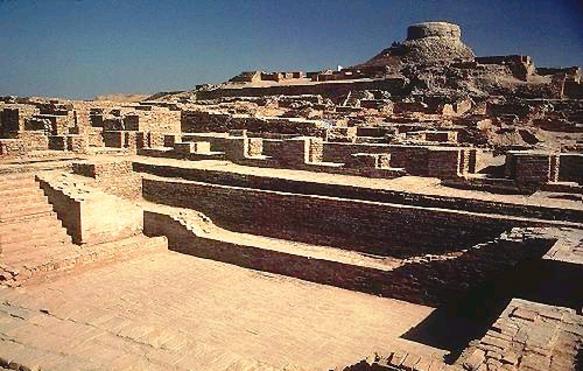
Most interesting to me this time is that, according to Elle Rogersdotter, one of every ten artifacts at the intriguing Indus Valley Civilization, the first civilization of South Asia, was for fun, including dice and gaming pieces.

The magnificent civilization, unlike others of its kind, does not include anything that can be interpreted as a temple or palace, confusing researchers used to think that elites were necessary for social organization. However other early civilizations of West Asia (Jericho, Çatalhöyuk) were also classless it seems. 

Besides the many toys and games, the people of Mohenjo Daro also enjoyed other recreations like this huge public bath or swimming pool:


Other items I found notable in this newsletter are:

February 12, 2011

Quote of the month: Txillardegi


Maybe Basque language will not be saved with a state, but without a state for sure it will be lost. 


J.L. Álvarez Enparantza, Txillardegi at Berria, today.

February 11, 2011

Swedish autosomal genetics

There is a new paper analyzing the genetic structure of Swedes:


Interestingly, Nothern Swedes strike as rather different from the rest, yet also distinct from Finns:

Fig. 3
Legend for the above image: 
  • BRI: British
  • CEU HapMap Utah whites
  • GER Germans
  • GOTA: South Swedish (Gotaland and Scania)
  • SVEA: Central Swedish (Svealand)
  • NOR: Northern Swedish (Norrland)
  • SWE: Swedish of unknown origin
  • FIW: SW Finnish
  • FIE: NE Finnish
  • RUS: Russian
At K=2 we can see the nowadays already classical dichotomy between Finnish and other North-Central Europeans.

At K=3 we get a third cluster (red) corresponding specifically to Swedes (or maybe Scandinavians in general) with some notable penetration in SW Finland but not in NE Finland. It's also apparent in Russia (but vanishes at a later stage, so disregard), Germany and somewhat in Britain/CEU. As the second most important declared ancestry of Utahns, after English, is Danish, we notice somewhat more importance of the Scandinavian component among them.

At K=4 we get the curious North Swedish distinctive cluster (green). The authors lament not having sampled Sami and Norwegians for comparison. However they do speculate to it representing a Sami element. This is in any case the most relevant discovery of this paper. 

At K=5 we get a distinct East European component dominant among Russians and with important penetration in Germany, probably the result of Indoeuropean (and then also Slavic) migrations in the past.

The authors mention that they have detected some genetic barriers in North Sweden, which they associate to the presence of the green component. This is represented in the image at the left, which is my modified version of fig. S7, whose legend reads:

Six zones of strong genetic change inferred by the Barrier software. The borders (in red) are numbered in decreasing order of strength, and they are based on FST distances that have been corrected for the geographical distance between provinces. Note that the FST values differ significantly from zero only for the first two borders.

That is why I emphasized with thicker lines the only two genetic barriers, which are statistically meaningful (1 and 2).

February 8, 2011

And more Neanderthal-Sapiens subtle differences

David Sánchez of Noticias de Prehistoria, has today a very nice review (in Spanish language) of several papers which have come out in short term, most of them already mentioned here, on subtle anatomical differences between Neanderthals and Homo sapiens.

However one was not known to me yet:

Qin Zhu and G. P. Bingham, Human readiness to throw: the size–weight illusion is not an illusion when picking the best objects to throw. Evolution and Human Behavior, 2011. Pay per view. (doi:10.1016/j.evolhumbehav.2010.11.005)

Abstract

Long-distance throwing is uniquely human and enabled Homo sapiens to survive and even thrive during the ice ages. The precise motoric timing required relates throwing and speech abilities as dependent on the same uniquely human brain structures. Evidence from studies of brain evolution is consistent with this understanding of the evolution and success of H. sapiens. Recent theories of language development find readiness to develop language capabilities in perceptual biases that help generate ability to detect relevant higher order acoustic units that underlie speech. Might human throwing capabilities exhibit similar forms of readiness? Recently, human perception of optimal objects for long-distance throwing was found to exhibit a size–weight relation similar to the size–weight illusion; greater weights were picked for larger objects and were thrown the farthest. The size–weight illusion is: lift two objects of equal mass but different size, the larger is misperceived to be less heavy than the smaller. The illusion is reliable and robust. It persists when people know the masses are equal and handle objects properly. Children less than 2 years of age exhibit it. These findings suggest the illusion is intrinsic to humans. Here we show that perception of heaviness (including the illusion) and perception of optimal objects for throwing are equivalent. Thus, the illusion is functional, not a misperception: optimal objects for throwing are picked as having a particular heaviness. The best heaviness is learned while acquiring throwing skill. We suggest that the illusion is a perceptual bias that reflects readiness to acquire fully functional throwing ability. This unites human throwing and speaking abilities in development in a manner that is consistent with the evolutionary history.

Arguably this subtle ability of intuitively evaluating objects for their throwing characteristics was not extant among Neanderthals or was less developed. Or at least that is what co-author Bingham argues based on size of cerebellum and posterior-parietal cortex in both species (more developed in ours).

Also, as complement to all this digression on the various Homo sp. hunting techniques and biological abilities, David includes a beautiful documentary on Bushmen hunting, narrated by David Attenborough. In it we can follow how a group of Bushmen track and hunt a kudu in some eight hours and the rather unexpected advantages of our species in the hunt (long term resistance and sweat specially):


See also:

February 7, 2011

Homo sapiens: marathon runners

I recently mentioned some research that suggested that Neanderthals were good at sprinting. Well, now it seems that our kin was (is) instead much better than Neanderthals at long distance running. However our European aboriginal cousins were good at walking and at strength-demanding exercises.

All this based on the proportions of the heel bone, the calcaneus.


Neanderthal heel was taller than ours and would hence have been quite worse for the spring action that is critical in running performance.

Source: PhysOrg, via AiE.

Brain's electrical fields: feature, not any bug

Caltech researchers have found that the electric fields of the brain are not just any mere by product of neuronal electrical activity but that they actually provide feedback to neurones and is an important part of the cognitive process.

In the words of lead researcher Costas Anastassiou:

... while active neurons give rise to extracellular fields, the same fields feed back to the neurons and alter their behavior.

So far, neural communication has been thought to occur at localized machines, termed synapses. Our work suggests an additional means of neural communication through the extracellular space independent of synapses.

Importantly external electric fields as weak as 1 mV/mm alter the behavior of neurones. Typically mammalian brains have fields of 2-3 mV/mm or more, what implies that they are actually affecting the brain's behavior internally.

An open question is whether electric fields external to our bodies such as those produced by all types of machines, as well as electric and telecommunication installations, do have an effect in our brains and which one. Even the Earth has its own significant electromagnetic field which interacts with the also powerful Solar one in barely researched ways.

Source: Science Daily.

Ref. paper: Costas A. Anastassiou et al., Ephaptic coupling of cortical neurons. Nature Neuroscience, 2011. Pay per view.

February 6, 2011

Linguistic musings: Adur, Apru and Aphrodite

There's a lengthy discussion after my latest speculative incursion into the messy field of Linguistics, probably breaking a record in what refers to comments in this blog: 210 so far!

But what brings me to write this note is that in latest comments have partly dealt with the origins of the name of the goddess Aphrodite, also known by her Latin name of Venus, but to Etruscans known as Apru, giving name to the month of April.

La nascita di Venere (Botticelli)
Botticelli famously imagined this way the legend of Aphrodite's birth

The indoeuropeist hypothesis of Aphrodite's name says that it comes from aphrós (foam), reflecting her mythological birth out of the sea foam after the severed testicles of Ouranos fell on it. Reader and linguist Octavià Alexandre argued the following purely IE etymology (for aphrós)

from IE *ºnbh-ro-/*ºnbhr-i- 'rain', a derivate of *nebh- 'cloud, mist'

However I protested that rain seems unrelated to foam or surf. And then (not long ago) he provided me with a most valuable tip, that I, ignorant of the subtleties of Classical Greek, could have never figured on my own:

The Greek word can also refer to dribble (Spanish baba). 

This immediately ringed a bell in my mind because there's a special word in Basque for it: adur. It is special not just because it means saliva or mucosa but because it also has a very special mythological meaning as the magic fluid of the universe. As such it is present in the name of the Basque river Adur (Adour in French) and probably also in English river Adur and the so many rivers in Europe with the pre-Indoeuropean particle dur- in them. 

However I had not expected this element to show up at all in SE Europe or the Eastern Mediterranean. Even if I am familiar with the classical Gimbutist theory of Old Europe and the alleged importance of the fluid and its zig-zag symbols, particularly common in Vinča culture iconography (but also apparent in other contexts and often associated to female sexuality or birthgiving), I had never suspected a relationship with Basque word and mythic concept Adur.

A few days ago Andalusian archaeology blog Pileta de Prehistoria mentioned (following Discovery News) the finding of a "stone age fertility ritual object" in Poland dated to c. 11,000 years ago. I did not give this finding too much importance at first, even if it is curiously a lot older than the better known Neolithic counterparts, but now I feel the need to add it to the evidence in favor of this Adur-Apru pan-European link.

The fertility meaning is explained because of the zig-zag symbols, which are very much like those of Vinča iconography but also because the body proportions of the human icon are feminine, strongly suggesting the moment of birthgiving, a most important cosmological instance for any religiosity connected with reality  (i.e. not pamphletist dogmatic "revealed" religions, like Judeochristoislamism).

Back to Aphrodite, let's remember that she is not any Olympian goddess (not sibling or daughter of Zeus) but obviously related to a pre-Olympian cosmology, fully in connection with the early mythical (and terribly Oedipic) struggle between Kronos (Saturn) and Ouranos. Aphrodite is by all accounts a pre-Indoeuropean goddess closer to West Asian goddesses like Astarte, all them associated to the planet we know today as Venus. 

Let's recall as well that it was Trojan favor for Aphrodite (and not the less sensual and more Indoeuropean-Patriarchal goddesses Hera, the wife, or Athena, the warrior maiden) the mythological trigger of the war as narrated by Homer. Aphrodite is clearly one of the last incarnations of the ancient Mother Goddess that Gimbutas' often genial intuition found in Old Europe.

So Aphrodite, Apru in Etruscan, might well be the religious embodiment of this perception of the "magic flow" and its sexual and reproductive ("fertility") implications, so important in Neolithic Europe and preserved till Modernity in the Basque Country (then becoming Satanic iconography in some cases, like the black billy goat, thanks to the Inquisition). 

Therefore Pelasgian-Etruscan Apru, derived into Greek as Aphrós should be foam, salive, and magic fluid in general. The fluid of life. 

Exactly the same as Adur, which is almost for sure a cognate. 

Now, which was first, the chicken of the egg? Is Apru or Adur the oldest term? This I live open to discussion. However the Polish Epipaleolithic finding is highly suggestive of a pre-Neolithic and hence Vasconic origin for this concept, which fits well with the fact that at least the ending of Adur looks very much Vasconic (ur is water in modern Basque).


Important update (Feb 6):

It has been brought to my attention (see comments) that Apru is not the genuine Etruscan name of Venus-Aphrodite, it was Turan instead. Apru was claimed by linguist E. Beneviste as the root of the Etruscan-Latin month of April. In this theory, Apru would not be a genuine Etruscan word but the Etruscan version of Greek Aphrós, shortening of Aphrodite.

So we can pretty much ignore this Etruscan word. Yet all which was said on Aphrós and Adur stand and they are the core of the argumentation here, with Apru being less relevant.


Clarification:

In case anyone has any doubt Octavià does not support this hypothesis of course. I just had to give him credit for opening my eyes to the possible Greek-Basque connection aphrós-adur because I would not have been able to think of it without his suggestions. But he, of course, disagrees with all my conclusions in this entry.