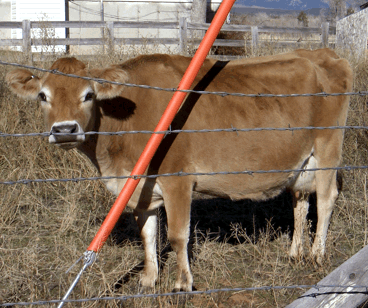
Showing posts with label bovine genetics. Show all posts

October 21, 2016

Wisent co-existed with true bison already in the Paleolithic

A fascinating story this one indeed: the European bison or wisent has some ancestry related to the cow, evident in its mitochondrial DNA. This was already known but what wasn't known is that this distinct "hybrid" species of bison dated to the Upper Paleolithic. Thanks to the excellent records of anonymous prehistorical biologists who recorded them in Southwestern European rock art with great detail and naturalism, modern researchers have realized that the wisent, with its bovid heritage, existed already in the Upper Paleolithic. Ancient DNA recovery has now confirmed the artist's impression.

Julien Soubrier et al. Early cave art and ancient DNA record the origin of European bison. Nature communications, 2016. Open access → LINK [doi:10.1038/ncomms13158]

Abstract

The two living species of bison (European and American) are among the few terrestrial megafauna to have survived the late Pleistocene extinctions. Despite the extensive bovid fossil record in Eurasia, the evolutionary history of the European bison (or wisent, Bison bonasus) before the Holocene (< 11.7 thousand years ago (kya)) remains a mystery. We use complete ancient mitochondrial genomes and genome-wide nuclear DNA surveys to reveal that the wisent is the product of hybridization between the extinct steppe bison (Bison priscus) and ancestors of modern cattle (aurochs, Bos primigenius) before 120 kya, and contains up to 10% aurochs genomic ancestry. Although undetected within the fossil record, ancestors of the wisent have alternated ecological dominance with steppe bison in association with major environmental shifts since at least 55 kya. Early cave artists recorded distinct morphological forms consistent with these replacement events, around the Last Glacial Maximum (LGM, ∼21–18 kya).


The depictions of both types of bison are rather distinct but it seems nobody had noticed the difference until now, as the researchers explain in this article.

Fig. 1 - (a) Reproduction from Lascaux cave (France), from the Solutrean or early Magdalenian period (20,000 kya—picture adapted from ref. 53). (b) Reproduction from the Pergouset cave (France), from the Magdalenian period (<17,000 kya—picture adapted from ref. 54).

The ancient wisents sequenced now carry a distinct mtDNA haplogroup, called "clade X", which is sister to that of modern wisents (all descending from just 12 survivors). This wisent macro-haplogroup forms a clade with that of bovine cattle (cows of all sorts, both taurine and indicine) but they are joined only at the root, suggesting that the hybridization event that created the wisents as distinct species is very old, just a bit more recent than the divergence of cow and bison.

Fig. 2 - (a) Phylogenetic tree inferred from bovine mitochondrial control region sequences, showing the new clade of bison individuals. The positions of the newly sequenced individuals are marked in red for CladeX. (b) Bovine phylogeny estimated from whole-mitochondrial genome sequences, showing strong support for the grouping of wisent and CladeX with cattle (cow) and zebu. For both trees (a,b) numbers above branches represent the posterior probabilities from Bayesian inference, numbers below branches represent approximate likelihood ratio test support values from maximum-likelihood analysis and scale bars represent nucleotide substitutions per site from the Bayesian analysis. (c) Maximum-clade-credibility tree of CladeX and wisent estimated using Bayesian analysis and calibrated with radiocarbon dates associated with the sequenced bones. Dates of samples older than 50 kyr were estimated in the phylogenetic reconstruction. (d) Map showing all sampling locations, using the same colour code (red for CladeX, orange for wisent and blue for steppe bison).

So it is not random auroch hybridization but a very specific and very ancient episode of admixture between the ancestors of bisons and cows.

The two species appear to have distinct ecological niches:

The detailed records of the southern Ural sites allow the timing of the population replacements between steppe bison and wisent to be correlated with major palaeoenvironmental shifts, revealing that the wisent was associated with colder, more tundra-like landscapes and absence of a warm summer.

This pattern seems to correspond with the periods in which the two species are portrayed in rock art, as two of the researchers explain in this video (third part):


Post-statement: I must say that, on second thought, I'm not really convinced by the claim of wisent corresponding to colder periods. In fig. 1 above it is apparent that it is the steppe bison which corresponds to the last glacial maximum (LGM) in Southwestern Europe and not the wisent, which only shows up after the end of this coldest period. 

I wonder if the researchers are explaining themselves well enough on this aspect or if it is a case of wishful thinking, maybe caused by different conditions in SW Europe (where the rock art is) and the Southern Urals (where most of the archaeogenetic and paleontological data comes from). 

At the very least, judging on fig. 1, it would be the steppe bison the one corresponding with the coldest spell and the wisent the one corresponding to more temperate conditions. Can someone explain me what is going on here?

August 21, 2016

Genetic prehistory of European bovine cattle

Quickies

Another study on European cattle, suggesting little to no admixture with aboriginal aurochs. However, as far as I can see, they did not directly compare with European aurochsen, so I'm rather skeptic, as their conclusions seem to derive only from modeling out of an incomplete dataset.

Amelie Scheu et al., The genetic prehistory of domesticated cattle from their origin to the spread across Europe. BMC Genetics 2016. Open accessLINK [doi:10.1186/s12863-015-0203-2]

Abstract

Background

Cattle domestication started in the 9th millennium BC in Southwest Asia. Domesticated cattle were then introduced into Europe during the Neolithic transition. However, the scarcity of palaeogenetic data from the first European domesticated cattle still inhibits the accurate reconstruction of their early demography. In this study, mitochondrial DNA from 193 ancient and 597 modern domesticated cattle (Bos taurus) from sites across Europe, Western Anatolia and Iran were analysed to provide insight into the Neolithic dispersal process and the role of the local European aurochs population during cattle domestication.

Results

Using descriptive summary statistics and serial coalescent simulations paired with approximate Bayesian computation we find: (i) decreasing genetic diversity in a southeast to northwest direction, (ii) strong correlation of genetic and geographical distances, iii) an estimated effective size of the Near Eastern female founder population of 81, iv) that the expansion of cattle from the Near East and Anatolia into Europe does not appear to constitute a significant bottleneck, and that v) there is evidence for gene-flow between the Near Eastern/Anatolian and European cattle populations in the early phases of the European Neolithic, but that it is restricted after 5,000 BCE.

Conclusions

The most plausible scenario to explain these results is a single and regionally restricted domestication process of cattle in the Near East with subsequent migration into Europe during the Neolithic transition without significant maternal interbreeding with the endogenous wild stock. Evidence for gene-flow between cattle populations from Southwestern Asia and Europe during the earlier phases of the European Neolithic points towards intercontinental trade connections between Neolithic farmers.


Figure 1

MDS Plot of d-loop sequences from 13 spatiotemporal groups of ancient domesticated cattle. The MDS plot is based on Reynolds’ FST. Numbers represent the age of samples in BCE per group; brackets contain the number of sequences per group.

October 28, 2015

Irish and British cattle may have greater wild auroch admixture

Quickies

Stephen D.E. Park et al., Genome sequencing of the extinct Eurasian wild aurochs, Bos primigenius, illuminates the phylogeography and evolution of cattle. Genome Biology 2015. Open accessLINK [doi:10.1186/s13059-015-0790-2]

Abstract

Background

Domestication of the now-extinct wild aurochs, Bos primigenius, gave rise to the two major domestic extant cattle taxa, B. taurus and B. indicus. While previous genetic studies have shed some light on the evolutionary relationships between European aurochs and modern cattle, important questions remain unanswered, including the phylogenetic status of aurochs, whether gene flow from aurochs into early domestic populations occurred, and which genomic regions were subject to selection processes during and after domestication. Here, we address these questions using whole-genome sequencing data generated from an approximately 6,750-year-old British aurochs bone and genome sequence data from 81 additional cattle plus genome-wide single nucleotide polymorphism data from a diverse panel of 1,225 modern animals.

Results

Phylogenomic analyses place the aurochs as a distinct outgroup to the domestic B. taurus lineage, supporting the predominant Near Eastern origin of European cattle. Conversely, traditional British and Irish breeds share more genetic variants with this aurochs specimen than other European populations, supporting localized gene flow from aurochs into the ancestors of modern British and Irish cattle, perhaps through purposeful restocking by early herders in Britain. Finally, the functions of genes showing evidence for positive selection in B. taurus are enriched for neurobiology, growth, metabolism and immunobiology, suggesting that these biological processes have been important in the domestication of cattle.

Conclusions

This work provides important new information regarding the origins and functional evolution of modern cattle, revealing that the interface between early European domestic populations and wild aurochs was significantly more complex than previously thought.

Fig. 5. Geographic contour map of aurochs genomic admixture with individual European breed D statistics (ABBA/BABA test results) plotted according to population origin and visualized using the ArcMap component of the ArcGIS software suite. The ABBA/BABA test tree topology is also shown and the contour point value for each European breed (P1) was generated from the mean D statistic where P2 is set to each of seven West African taurine populations in turn

August 22, 2015

European cows: overall Neolithic genesis and its sophisticated management in the Scandinavian frontier

Quantity over quality series.


These are two different papers but both deal with European bovine cattle in the Neolithic, hence the bundle.


Amelie Schleu et al. The genetic prehistory of domesticated cattle from their origin to the spread across Europe. BMC Genetics 2015. Open accessLINK [doi:10.1186/s12863-015-0203-2]


Abstract

Background

Cattle domestication started in the 9th millennium BC in Southwest Asia. Domesticated cattle were then introduced into Europe during the Neolithic transition. However, the scarcity of palaeogenetic data from the first European domesticated cattle still inhibits the accurate reconstruction of their early demography. In this study, mitochondrial DNA from 193 ancient and 597 modern domesticated cattle (Bos taurus) from sites across Europe, Western Anatolia and Iran were analysed to provide insight into the Neolithic dispersal process and the role of the local European aurochs population during cattle domestication.

Results

Using descriptive summary statistics and serial coalescent simulations paired with approximate Bayesian computation we find: (i) decreasing genetic diversity in a southeast to northwest direction, (ii) strong correlation of genetic and geographical distances, iii) an estimated effective size of the Near Eastern female founder population of 81, iv) that the expansion of cattle from the Near East and Anatolia into Europe does not appear to constitute a significant bottleneck, and that v) there is evidence for gene-flow between the Near Eastern/Anatolian and European cattle populations in the early phases of the European Neolithic, but that it is restricted after 5,000 BCE.

Conclusions

The most plausible scenario to explain these results is a single and regionally restricted domestication process of cattle in the Near East with subsequent migration into Europe during the Neolithic transition without significant maternal interbreeding with the endogenous wild stock. Evidence for gene-flow between cattle populations from Southwestern Asia and Europe during the earlier phases of the European Neolithic points towards intercontinental trade connections between Neolithic farmers.


Jurt J. Gron et al., Cattle Management for Dairying in Scandinavia’s Earliest Neolithic. PLoS ONE 2015. Open access → LINK [doi:10.1371/journal.pone.0131267]

Abstract

New evidence for cattle husbandry practices during the earliest period of the southern Scandinavian Neolithic indicates multiple birth seasons and dairying from its start. Sequential sampling of tooth enamel carbonate carbon and oxygen isotope ratio analyses and strontium isotopic provenancing indicate more than one season of birth in locally reared cattle at the earliest Neolithic Funnel Beaker (EN I TRB, 3950-3500 cal. B.C.) site of Almhov in Scania, Sweden. The main purpose for which cattle are manipulated to give birth in more than one season is to prolong lactation for the production of milk and dairy-based products. As this is a difficult, intensive, and time-consuming strategy, these data demonstrate complex farming practices by early Neolithic farmers. This result offers strong support for immigration-based explanations of agricultural origins in southern Scandinavia on the grounds that such a specialised skill set cannot represent the piecemeal incorporation of agricultural techniques into an existing hunter-gatherer-fisher economy.

April 12, 2014

Genetic paleohistory of domestic cows shows major differentiation in Africa

A new study reveals that African Bos taurus breeds are quite deeply diverged from the Eurasian branch, showing an early differentiation of both continental populations, admixture with African wild auroch and livestock export from Europe to Asia. 


Jared E. Decker et al., Worldwide Patterns of Ancestry, Divergence, and Admixture in Domesticated Cattle. PLoS ONE 2014. Open accessLINK [doi:10.1371/journal.pgen.1004254]

Abstract

The domestication and development of cattle has considerably impacted human societies, but the histories of cattle breeds and populations have been poorly understood especially for African, Asian, and American breeds. Using genotypes from 43,043 autosomal single nucleotide polymorphism markers scored in 1,543 animals, we evaluate the population structure of 134 domesticated bovid breeds. Regardless of the analytical method or sample subset, the three major groups of Asian indicine, Eurasian taurine, and African taurine were consistently observed. Patterns of geographic dispersal resulting from co-migration with humans and exportation are recognizable in phylogenetic networks. All analytical methods reveal patterns of hybridization which occurred after divergence. Using 19 breeds, we map the cline of indicine introgression into Africa. We infer that African taurine possess a large portion of wild African auroch ancestry, causing their divergence from Eurasian taurine. We detect exportation patterns in Asia and identify a cline of Eurasian taurine/indicine hybridization in Asia. We also identify the influence of species other than Bos taurus taurus and B. t. indicus in the formation of Asian breeds. We detect the pronounced influence of Shorthorn cattle in the formation of European breeds. Iberian and Italian cattle possess introgression from African taurine. American Criollo cattle originate from Iberia, and not directly from Africa with African ancestry inherited via Iberian ancestors. Indicine introgression into American cattle occurred in the Americas, and not Europe. We argue that cattle migration, movement and trading followed by admixture have been important forces in shaping modern bovine genomic variation.

The triple (indicine or zebuine, Eurasian taurine, African taurine) division is apparent even in the limited scope of Principal Component Analysis, with African taurine breeds standing out in the intra-taurine distinctiveness in PC2 while PC1 shows the pre-Neolithic taurine-indicine distinction:

Figure 1. Principal component analysis of 1,543 animals genotyped with 43,043 SNPs.
Points were colored according to geographic origin of breed; black: Africa, green: Asia, red: North and South America, orange: Australia, and blue: Europe.

An admixture-enabled phylogeny shows more clearly the deep divergence of the African branch of taurine cows:

Figure 4. Phylogenetic network of the inferred relationships between 74 cattle breeds.
Breeds were colored according to their geographic origin; black: Africa, green: Asia, red: North and South America, orange: Australia, and blue: Europe. Scale bar shows 10 times the average standard error of the estimated entries in the sample covariance matrix. Common ancestor of domesticated taurines is indicated by an asterisk. Migration edges were colored according to percent ancestry received from the donor population. Migration edge a is hypothesized to be from wild African auroch into domesticates from the Fertile Crescent. Migration edge b is hypothesized to be introgression from hybrid African cattle. Migration edge c is hypothesized to be introgression from Bali/indicine hybrids into other Indonesian cattle. Migration edge d signals introgression of African taurine into Iberia. Migration edges e and f represent introgression from Brahman into American Criollo.

Admixture K=3 is also consistent with this triple pattern:

Figure 6. Ancestry models with 3 ancestral populations (K = 3).
Blue represents Eurasian Bos t. taurus ancestry, green represents Bos javanicus and Bos t. indicus ancestry, and dark grey represents African Bos. t. taurus ancestry. See Supplementary Figures S5, S6, S7, S8, S9, S10 for other values of K.

The authors find that modern Anatolian breeds are not representative of early Neolithic cows:
Anatolian breeds (AB, EAR, TG, ASY, and SAR) are admixed between blue Fertile Crescent, grey African-like, and green indicine-like cattle (Figures 5 and 6), and we infer that they do not represent the taurine populations originally domesticated in this region due to a history of admixture. Zavot (ZVT), a crossbred breed [25], has a different history with a large portion of ancestry similar to Holsteins (Figures 2 and S8, S9, S10). The placement of Anatolian breeds along principal components 1 and 2 in Figure 1 [23], the ancestry estimates in Figure 6, their extremely short branch lengths in Figures 24, and significant f3 statistics confirm that modern Anatolian breeds are admixed (see Methods for explanation of f-statistics).

As mentioned above, they also find that African taurines are much deeper diverged from Eurasian taurines than would be expected if they all diverged in a simple model from early Neolithic cows. This is partly caused, according to the study, because of a later history of back-migration (or export) of European cows to Asia, including the Far East:
We conclude that there were two waves of European introgression into Far East Asian cattle, first with Mediterranean cattle (which carried African taurine and indicine alleles) brought along the Silk Road [29] and later from 1868 to 1918 when Japanese cattle were crossed with British and Northwest European cattle [25].

However there is more: African breeds also appear to have important levels of admixture (~26%) with native African wild auroch:
The second factor that we believe underlies the divergence of African taurine is a high level of wild African auroch [30], [31] introgression. Principal component (Figure 1), phylogenetic trees (Figures 2 and 3), and admixture (Figure 6) analyses all reveal the African taurines as being the most diverged of the taurine populations. Because of this divergence, it has been hypothesized that there was a third domestication of cattle in Africa [32][36]. If there was a third domestication, African taurine would be sister to the European and Asian clade. When no migration events were fit in the TreeMix analyses, African cattle were the most diverged of the taurine populations (Figures 2 and 3), but when admixture was modeled to include 17 migrations, all African cattle, except for East African Shorthorn Zebu and Zebu from Madagascar which have high indicine ancestry, were sister to European cattle and were less diverged than Asian or Anatolian cattle (Figure 4), thus ruling out a separate domestication. Our phylogenetic network (Figure 4) shows that there was not a third domestication process, rather there was a single origin of domesticated taurine (Asian, African, and European all share a recent common ancestor denoted by an asterisk in Figure 4, with Asian cattle sister to the rest of the taurine lineage), followed by admixture with an ancestral population in Africa (migration edge a in Figure 4, which is consistent across 6 separate TreeMix runs, Figure S4). This ancestral population (origin of migration edge a in Figure 4) was approximately halfway between the common ancestor of indicine and the common ancestor of taurine. We conclude that African taurines received as much as 26% (estimated as 0.263 in the network, p-value<2.2e-308) of their ancestry from admixture with wild African auroch, with the rest being Fertile Crescent domesticate in origin.

As it is well known, African breeds also show variable frequencies of indicine (zebu) ancestry, which is c. 0-20% in West Africa and as much as 74% in some East African breeds, owing to greater exchanges with Asia in historical times. 
... we revealed two clusters of indicine ancestry possibly resulting from the previously suggested two waves of indicine importation into Africa, the first occurring in the second millennium BC and the second during and after the Islamic conquests [25], [34], [48].

However the study notices that, after controlling for the African wild auroch's admixture effect, the appearance of indicine admixture in some breeds collapses to zero (and is reduced in other cases):
Thus, we conclude that contrary to the assumptions and conclusions of [55] cattle with pure taurine ancestry do exist in Africa.

Other results are a confirmation of SE origin of European cows, a specific founder effect in Europe for shorthorn breeds and significant (8-23%) African admixture in Iberian breeds. Some American breeds are indeed a colonial mix of taurine and indicine. 

Figure 5. Worldwide map with country averages of ancestry proportions with 3 ancestral populations (K = 3).
Blue represents Eurasian Bos t. taurus ancestry, green represents Bos javanicus and Bos t. indicus ancestry, and dark grey represents African Bos. t. taurus ancestry. Please note, averages do not represent the entire populations of each country, as we do not have a geographically random sample.

August 17, 2012

Qualifying diversity in bovine cattle

There is a new open access paper for all those with interest in the genetic history of cows:

Deirdre C. Purfield et al., Runs of homozygosity and population history in cattle. BMC Genetics, 2012. Open access ··> LINK [doi:10.1186/1471-2156-13-70]

The runs of homozygosity (ROH) are used to qualify the nature of the inbreeding (endogamy) process where it exists. When the ROHs are short (for example among Malagassy Zebu), that indicates that the genome has been recombined and fragmented many times, while when the ROH are longer, it can be inferred that inbreeding process is recent, as happened in Jersey and Guernsey, who applied strict cattle regulations since the 19th century.

Fig. 6 - minimally annotated by me
Figure 6 Average sum of Runs of Homozygosity (ROH) per bovine SNP50 animal <20 Mb in length within breed VS average sum of ROH >20 Mb in length. Breeds that originate from the same geographical area tend to cluster together with African Bos taurus breeds showing low levels for both measures, except for the Somba, Oulmès Zaer and Lagune breeds where elevated levels were clearly highly influenced by long ROH whereas the zebu breeds showed intermediate values of ROH but these were more strongly influenced by shorter ROH

The full names of the breeds are:
  • African taurines: Baoule (BAO), Lagoude (LAG), N'Dama (NDA), Oulmès Zaer (OUL),  Somba (SOM)
  • African hybrids: Kuri (KUR), Sheko (SHK)
  • African zebu: Zebu Bororo (ZBO, Zebu Fulani (ZFU), Zebu from Madagascar (ZMA)
  • British Isles: Angus (ANG), Guernsey (GNS), Hereford (HFD), Jersey (JER), Red Angus (RGU)
  • Northern Europe: Bretonne Pied Noire (BPN), Holstein-Friesian (HOL), Maine-Anjou (MAN) Maraichine from Parthenaise (MAR), Monbeliard (MON), Normande (NOR), Norwegian Red Cattle (NRC), French Pied Rouge Lowland (PRP)
  • Central/SW France: Aubrac (AUB), Charolais (CHL), Charolais from UK (CHA), Gascon (GAS), Limousin (LMS), Salers (SAL)
  • Alpine: Abondance (ABO), French Brown Swiss (BRU), Brown Swiss (BSW), Piedmontese (PMT), Romagnola (RMG), Tarine (TAR), Vosgienne (VOS)
  • Zebus: Beef Master (BMA), Brahman (BRM), Gir (GIR), Nelore (NEL), Santa Gertrudis (SGT)

June 8, 2012

Cow lineages in Europe, Africa and creole America

Another paper on bovine mtDNA adds important information to better understand the major matrilineage of domestic bovine cattle: haplogroup T1.


Importantly, Bonfiglio made a significant effort in sampling Egyptian and Ethiopian cattle, as well as some Latin American breeds. Not a single haplogroup outside of T1 was found, unlike in Europe where P, Q and R lineages do exist, suggesting some level of hybridization with wild aurochsen. There is however some uncertainty as for the exact phylogeny of haplogroups T1e (European) and T1f (Euro-Egyptian), which could also be branches of T1'2'3, as illustrated in fig. 1:

click to expand
The authors conclude that, soon after domestication in West Asia, bovine cattle spread to both Europe and Africa, where experienced secondary expansions, as evidenced by at least one lineage (T1d) looking East African by origin. 

That is also probably the case of T1c (Euro-Egyptian but more diverse in Egypt) and T1b (also most basally diverse in Egypt), which is the origin of the African-derived American "AA" haplotype of Paraguayan cattle, which is within this lineage.


Dated to 15,000 BP or older (source)
Update(Jun 10): There is abundant evidence in form of rock art and some remains at Jebel Uweinat, Qurta and Wadi Qubaniya supporting presence of wild taurine cattle in NE Africa since at least 15,000 BP. This allows for a possible semi-independent domestication event in Africa for bovids (h/t to Marnie).


March 16, 2012

Echoes from the Past (Mar 16)

You know: the stuff that should have been commented if I was perfect or a paid professional - but was not:


Genetics

Pigmentation reasonably predicted

Yan Klimentidis mentions today that, according to a new paper (Cerqueira 2012, pay per view) as much as 64% of skin pigmentation can be predicted from genes (many of them), reaching to as much as 94% with freckles. The rate of success is much lower however for hair and eye color (44% and 36% respectively).

Are Ethiopians genetically adapted to high altitudes?

I'm generally skeptic of claims of genetic adaption to high altitudes when it does not seem to have ever been demonstrated that this adaption is genetic and not just mere biological flexibility caused by living in the area since childhood. In any case, L. Scheinfeldt 2012 (open access) claims that some candidate genes have been identified for the Amhara.

Taurine cattle could descend from as few as 80 female founders ··> R. Bollognino 2012 (ppv).


Human Evolution

Honey and human evolution: surely you never thought about it before, right? Nutritional anthropologist A. Crittenden thinks that honey may have been more important than meat, based on Hadza practices, which include symbiosis (cooperation) with a bird ··> The Rebel Yell.

Did prehistoric climate change affect human evolution the same as other animals? That is what J.R. Stewart and C.B. Stringer argue in a paper (ppv) ··> Science Daily.


Paleolithic

Speculating about Still Bay culture (South Africa) and climate change ··> article by archaeologist J. Tolleson at Nature.

These marks are the first evidence of humans in Ohio
First evidence of hunting in Ohio c. 13,500 years ago ··> Cleveland Museum of Natural History.

Universal rock art script? David Sánchez mentions again[es] (I commented in 2010 too) the unusual hypothesisi of G. von Petzinger on the possibility that some sort of universal script used by hunter-gatherers around the world, as the markings on the walls appear to be roughly the same everywhere. I am rather skeptic though but curious anyhow. Among the links provided some are in English: video, The Guardian, New Scientist, UVic Space and Cambridge University.


Neolithic and Chalcolithic

One of the dolmens found in Alcónetar
Göbekli Tepe attracted worshipers from 500 kilometers around: from Cappadocia and the border of Armenia ··> Live Science. 

Some Neolithic settlers may have arrived to Iberia from North Africa (specifically Oran area) ··> Archaeology News Network.

Chalcolithic settlement found in Galicia, between Carballo and Berdoias, not far from the mamoa (dolmen) of O Valouco, as a highway was being built ··> La Voz de Galicia[es].

Two dolmens found in Alcónetar (Extremadura, Spain) as the water of the reservoir of Alcántara, one of the largest in Europe, recede because of unprecedented drought ··> Hoy[es].

February 1, 2011

Aurochs mtDNA challenges bovine phylogeny

Long horned european wild ox
New research has genotyped the ancient mtDNA of a wild aurochs from Italy. Importantly, the research challenges current understanding of Bos taurus phylogeny, suggesting that clades T1, T3 and T4 are paraphiletic, or more precisely: that they cannot be resolved phylogenetically to full satisfaction because:

Bayesian phylogenetic analysis of the European cattle and aurochs mtDNA coding genomes revealed that a model allowing for polytomies is strongly supported over a strict bifurcating model (Bayes Factor >100). Therefore, the pattern of previously classified bovid clades and sub-clades is not supported, suggesting that recurrent mutations and short internal branches may limit meaningful evolutionary information.


The aurochs sequence falls within T3 but the authors warn against this classification because of the issues mentioned before.

December 29, 2010

Aurochs mtDNA in Italian cattle

Aurochs fighting wolves by H. Harder
The same as Neanderthals did not completely go extinct but live in us (albeit in very small apportion), another magnificent creature from old also survived extinction by means of hybridization.

Mitochondrial DNA haplogroups known to be from ancient aurochs, whose last known representative died in 1627, have been discovered in Italian cattle, amounting to as much as 1.5% of the sampled individuals.

The lineages belong to three haplogroups: P, Q and R. P and Q had already been sequenced in pre-Neolithic European bovines (aurochs) but so far no P had been detected among modern cattle (in this case only one individual). A novel haplogroup, R, was also sequenced in several animals and, because of its even more archaic phylogeny, it is also believed to be an aurochs and not a domestic lineage.

Fig. 2 full Q, P and R sequences, including one from a British aurochs (18)

October 2, 2010

French cattle genetics

This is a new paper that may provide some insight into cattle genetics. However, while Zebuine breeds are widely sampled, European breeds other than French (and a handful of NW European, Swiss and Italian breeds) are not, what makes more difficult to make a comprehensive assessment.

Mathieu Gautier et al, Insights into the Genetic History of French Cattle from Dense SNP Data on 47 Worldwide Breeds. PLoS ONE 2010. Open access.

Unsupervised hierarchical clustering of the 1,121 individuals genotyped for 44,706 SNPs
 
Legend is found at supplementary table S1 (download).

It is interesting that even at K=47 some populations still do cluster, a sign of a very intense relatedness that in some cases may be obvious (Angus varieties, Holstein from Europe and America) but in others maybe not so much.

If we stop at K=5 or K=6 we can appreciate three basic groups in Europe (taurine breeds):

The orange cluster includes most French and Swiss breeds (partial exceptions found only in the NW) and even permeates somewhat into England (Hereford) and Norway. It also includes Italian and Moroccan breeds, even if these have something of zebu. The purest representative is the Blond d'Aquitaine.

Blond d'Aquitaine
Excepting the Brown Swiss, the homogeneity of the main part of this cluster is maintained still at K=10, clearly suggesting a common origin for southern and  eastern French cattle, including North Italian breeds

The yellow cluster has Holstein as only pure representative but makes up the largest part, or at least a sizable fraction, of NW European cattle, from the Loire to Norway. Next to Holstein in purity is Angus, a Scottish breed.

Holstein-Frisian cattle
At K=10, Angus and Hereford already display their unique personalities anyhow, suggestive of an early divergence, possibly within the British Neolithic, a relatively late phenomenon, while the other NW European breeds, continental, still look "hybrid" instead.


The small green cluster is restricted to the Jersey breed.

Jersey cattle

The non-European or zebuine components don't show but a cline across Africa, with extremes in West Africa and India. Plus the distinct Lagune breed from Benin. This pattern remains pretty much the same at K=10.

The two rightmost breeds are modern North American taurine-zebuine hybrids. At K=10 it is apparent the dominance of Hereford and Angus components in each but at lower K levels they look identical. However at K=47 they appear as totally distinct clusters each on their own right, probably because of extreme inbreeding.

Back to European breeds, the authors speculate somewhat with a dual Mediterranean and Danubian Neolithic origins but the stop short of proclaiming any theory because they have to admit that their sampling is too limited for anything like that.

I must say that I know of no archaeological record of any cattle (Bos sp.) being associated with Mediterranean Neolithic (Cardium Pottery). This culture was specialized in fishing and ovicaprids, probably with some pigs too (and, of course, cereals, pulses and olives), not bovine cattle. But I'm not really sure how cattle was incorporated into these areas' economy, what certainly happened by Chalcolithic times at least, when bulls become a popular artistic and maybe religious motif in south Iberia (competing with deer, sometimes up to the point of transforming an animal into the other).

What seems pretty apparent is that a Chassey-La Lagozza (proto-Ligurian?) Chalcolithic origin can be speculated for this cluster. A lot should depend on Balcanic, Central European and Iberian affinities or differences, not considered here, but I can already say that the Blond d'Aquitaine looks similar to the usual montane Basque types, such as the Betizu, though these are usually reddish in color and have somewhat larger and often characteristically-shaped horns.

Betizu, typical Basque cow