April 22, 2013

OSL dating: Brazilian site is 22,000 years ago

Toca da Tira Peia is the new name of American prehistory, providing an OSL date for the layer of scattered stone tools of c. 22,000 years BP. Located near the also controversial Pedra Furada site, the date seems to give some support to those who dare to think outside the box on the early peopling of America.

Christelle Lahaye et al., Human occupation in South America by 20,000 BC: the Toca da Tira Peia site, Piauí, Brazil. Science 2013. Pay per view → LINK [doi:10.1016/j.jas.2013.02.019]

Abstract

When and how did the first human beings settle in the American continent? Numerous data, from archaeological researches as well as from palaeogenetics, anthropological and environmental studies, have led to partially contradictory interpretations in recent years, often because of the lack of a reliable chronological framework. The present study contributes to the establishment of such a framework using luminescence techniques to date a Brazilian archaeological site, the Toca da Tira Peia. It constitutes an exemplary case study: all our observations and measurements tend to prove the good integrity of the site and the anthropological nature of the artifacts and we are confident in the accuracy of the luminescence dating results. All these points underline the importance of the Toca da Tira Peia. The results bring new pieces of evidence of a human presence in the north-east of Brazil as early as 20,000 BC. The Toca da Tira Peia thus contributes to the rewriting of the history of the peopling of the American continent.

There are slightly older sites in North America, however they are all surrounded into some degree of controversy: Topper in South Carolina is dated to c. 23,000 cal-BP (C14) while some sites in Alberta, located in the Mackenzie "ice-free corridor" have also dates under the LGM layer (i.e. > 21 Ka BP).

There's actually nothing impossible about such early dates in my understanding.

See also:

Australian Burrup Peninsula's rock art is 30,000 years old

The open air engravings have managed to survive thanks to the extremely low erosion rates produced by the hardness of the rock combined with the local climate. 


The petroglyphs have been dated using the isotope beryllium-10. Based on current evidence, the archaeologists say, the occupation of the peninsula cannot be dated to before c. 42,000 years ago. 

Source: Australian Geographic.

Spring near Stonehenge occupied since Epipaleolithic

(CC by Jeffrey Pfau)
The spiritual relevance of Amesbury may well stem from a much older time than Neolithic or Chalcolithic. Recent research at a spring not far from Stonehenge has got radiocarbon dates of c. 7500 years ago, some three millennia before the building of the world-famous monument, and up to 4,700 BP, when the megalith was already in use.

The low budget research project led by David Jacques of Open University, who had spotted the site, known as Vespasian's Camp, just a mile north of Stonehenge, in air photos a decade ago. The site had never been researched before.

The findings imply some sort of continuity between the Epipaleolithic and Late Neolithic (i.e. Chalcolithic), although the details have yet to be systematized. 

Source: BBC News (includes video).

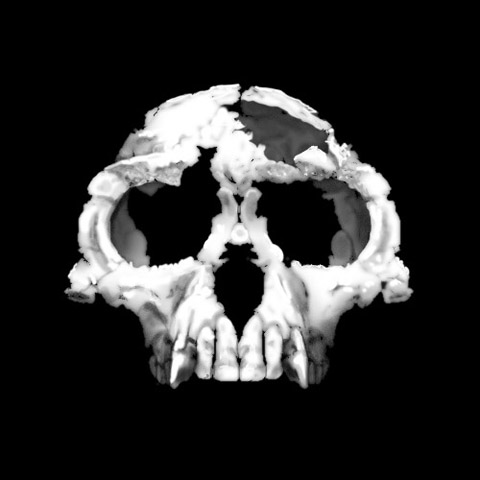
Ardipithecus ramidus' skull is hominin

Ardi's skull reconstructed
(CC by T. Michael Keesey)
I recently mentioned that Sahelanthropus tchadiensis 'Toumaï' was quite clearly within the hominini biological tribe, i.e. in the line leading to us and not anymore in the one leading to chimpanzees and bonobos. Now I have to echo the claim that a more recent being, Ardipithecus ramidus 'Ardi' also seems to have skull characteristics that place it in the hominin group. 

While the relevance of Toumaï's grouping is much greater, because it help us to clarify the issue of Pan-Homo divergence dates, which seems to be of the order of c. 8-13 million years ago (Langergraber 2012), the case of Ardi is not without interest anyhow in the understanding of human evolution. 


By examining 79 skull bases of chimps, gorillas, modern humans and ancient hominids, Kimbel’s group identified relationships among anatomical landmarks that distinguish apes from people and hominids. The researchers estimated the total length of A. ramidus’ skull bottom and found that it fell within a range characteristic of hominids, not apes.

As in more recent members of the Australopithecus genus, such as the 3.2-million-year-old partial skeleton nicknamed Lucy, Ardipithecus ramidus displays a relatively short, humanlike skull base, Kimbel said.

A new 3-D analysis of Ardi’s previously reconstructed pelvis, also presented April 11 at the anthropology meeting, finds a mix of monkey, ape and hominid characteristics. Although not confirming a consistently upright gait, this version of Ardi’s hips doesn’t undermine her proposed hominid status, said Nicole Webb of City University of New York, who led the research.

As for Ardi’s disputed mode of travel, she probably had a two-legged gait “but didn’t use her hands much while upright,” said Caley Orr of Midwestern University in Downers Grove, Ill., who didn’t participate in the new research. 

While Ardipithecus ramidus is dated to c. 4.4 Ma BP, there is another specimen of the same genus, Ardipithecus kadabba, dated to c. 5,7 Ma.


Ref. AAPA 2013 meeting (abstracts):
  • W. Kimbel et al. Ardipithecus ramidus and the evolution of the human cranial base.
  • N. Webb et al. An analysis of the Ardipithecus ramidus pelvis reconstruction using 3D geometric morphometric techniques.

April 18, 2013

Fu 2013: new ancient mtDNA sequences and "molecular clock" madness

It took me quite a while to get time to look at this study in some depth and when I finally did I must say I was rather disappointed. In any case the popular demand makes necessary to discuss it.

Qiaomei Fu et al., A Revised Timescale for Human Evolution Based on Ancient Mitochondrial Genomes. Current Biology 2013. Pay per view → LINK [doi:10.1016/j.cub.2013.02.044]

The study has two aspects: one, of great interest, which is the sequencing of a number of ancient remains, the other a complex and quite poorly explained and rendered speculation on how these sequences could be used to produce a refined molecular clock. 


Ancient mtDNA sequences

Most of the sequences used by Fu et al. in their molecular clock speculations are new and that part is very interesting:


I have highlighted in lime green the new sequences, otherwise also noted by the marker b. It is of note that the "Crô-Magnon 1" sequence produced a C14 age of just a few centuries, being therefore removed from the collection. Other Crô-Magnon 1 remains produced no useful data. 

The authors also decided to discard as possibly contaminated the UP sequence  from Pagicci Str. 4b. I have highlighted in red why they decided to do so: because the C→T misincorporation rate, characteristic of ancient remains, is too low, what makes contamination at least a serious probability. 

So we have as new data for the Upper Paleolithic landscape in Europe that the people of Dolni Vestonice carried lineages U* (found also in Swabian Magdalenian) and U8, in the line of haplogroups K, U8a (Basque) and U8b (Eastern Mediterranean). Also some late UP and Epipaleolithic sequences from Oberkassel (Low Rhineland, Germany), Loschbour (Luxemburg) and Continenza (Abruzzo, Italy) are U5b variants, consistent with other findings from various parts of Europe. In Paglicci (Apulia, Italy), another sequence yielded U2'3'4'7'8'9, surely an extinct variant of the ancestor of U8 and U2 (among other lineages). No radiocarbon date is available for any of the Italian remains.

In East Asia, Boschan, with B4c1a, provides one of the first Epipaleolithic sequences for the region. 


Molecular clock madness

The authors seem to intend, or so declare, to refine the molecular clock estimates by means of using these sequences as intermediate calibration references. Here I get the first big question: with all the literature on ancient DNA, why only these sequences? No idea.

Then the contradictions arise. I believe that I have synthesized the most obvious ones in the following marginal annotations (in red) to their molecular clock estimates:


Furthermore, the authors claim in the text that U5 is the oldest branch to diverge from U, however their TRMCA figure is of only 34.4 Ka BP (coding region), while Kostenki 14 has an age of 38 Ka BP and already carried U2, what really makes this claim extremely unlikely: U2 and its ancestor U2'3'4'7'8'9 should be considered the oldest U sublineage. 

I do not understand either why they force age estimates for many lineages for which they have no working aDNA references and instead desist of estimating the age of lineages for which they have several calibration points, like U2'3'4'7'8'9 or B4'5 (aka B). 

In brief: the claims of this paper on molecular-clock-o-logy are ill-explained, confusing, incoherent... a total mess. The raw data on ancient mtDNA is however good looking and of doubtless interest.

April 15, 2013

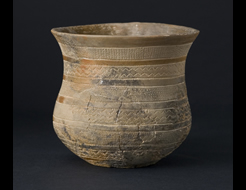
Central European Bell Beaker mtDNA: 88% H

Bell beaker from Hungary (source)
This doctoral thesis by Christina J. Adler is a most important study on the formation of the modern genetic pool (and hence population) in Central Europe. Previously we knew of data from the Paleolithic (U*), Epipaleolithic (U5, U4) and Earliest Neolithic (much more diverse but not yet modern in any sense). Then we had a huge blank until Urnfields (late Bronze), when the genetic pool seemed to be modern already. 

This thesis (found via Eurogenes) fills in the blanks at least to some extent.

Christina Jane Adler, Ancient DNA studies of Human Evolution. University of Adelaide (thesis), 2012. Freely accessible → LINK 

The thesis is, as usual in this kind of studies, extremely long; even the abstract is too long to copy here. Just to mention that the hard data (graphs, tables) is from page 96 on, although there are some other aspects in the text that deserve mention.

Critically Adler could research the ancient mtDNA of Bell Beaker and Únětice culture populations from several German sites, adding important information about the genetic pools of the Late Chalcolithic and Early Bronze Age. She also goes over previous studies on the same area.

The new data (table 2) can be synthesized as follows:
  • Bell Beaker:
    • Quedlinburg XII: 3 H-CRS (H1?), 1 J
    • Rothenschirmbach: 2 H3, 1 H5
    • Alberstedt: 1 H-CRS (H1?)
    • Total (simplified): 7 H, 1 J
  • Únětice:
    • Quedlinburg VIII: 1 U5a1a, 1 U2, 1 U*, 1 H7a, 1 T1
    • Quedlinburg XII: 1 U5a1a
    • Quedlinburg XIV: 1 T2
    • Esperstedt: 2 I*, 1 I1, 1 U5a1, 1 U5b, 1 T2b, 1 T2*, 1 W, 1 X
    • Total (simplified): 4 U5, 3 I, 3 T2, 1 T1, 1 U2, 1 U*, 1 W, 1 X
This extremely high apportion of mtDNA H is almost unprecedented in ancient (and probably also modern) mtDNA samples, in Europe only the Portuguese Neolithic and Epipaleolithic samples by Chandler 2005 seem to be comparable in any way, suggesting that this most important European matrilineage may have expanded from Iberia in the Chalcolithic (aka Late Neolithic in some Anglosaxon literature) with either Megalithism, Bell Beaker or both. 

It also seems to contradict the quite mainstream theory of Central European origins (post Corded Ware) of the Bell Beaker phenomenon and instead support the less popular Iberian origin theory. Until this very day I have been adherent to the Bohemian "Corded" origin theory (with some doubts) but today I have to admit that this genetic data weights heavily for the Iberian origin model, which in turn would fit very nicely with Venneman's Vasconic substrate theory. 

Regardless of what I may think, Adler herself is clearly pushing for the Iberian origin model all along in her thesis, theory which she seems to find the best fit scenario. 

Of course, the genetic landscape was not simply stabilized with Megalithism and Bell Beaker, more waves followed. The Western Indoeuropean Únětice culture seems to fit here as archetypal or potential source of other layers, resulting in modern genetic pools in many places (although as I have mentioned several times the Basque one seems stable since Early Neolithic). These Indoeuropean migrations (Tumuli, Urnfields, Hallstatt, La Tène, etc.) should explain the dilution of the extremely high apportion of H found in these Bell Beaker burials, as well as in Portugal (nowadays H is 40-50% in most of Western and Northern Europe).

The Únětice genetic landscape seems particularly interesting for including which is surely the oldest mtDNA I in Northern Europe (later very common in Viking Era Denmark). The only older case I know is again Early Neolithic Basque (same Paternabidea sample mentioned above) but I don't see any plausible relation. 


PS- I know still have in the "to do" department the paper of Qiaomei Fu, "A Revised Timescale for Human Evolution Based on Ancient Mitochondrial Genomes", which several readers were so kind to send me a copy of weeks ago, encouraging me to write on it. My apologies but I'm on it and I promise to write a review this very week unless the sky falls on my head (or real life equivalent).

April 14, 2013

Southern Native American Y-DNA: no correlation with language, extensive info on haplogroup C3

Genetics does not necessarily correlate with linguistic families. It often does not. This seems to be the case with Native Americans as well.

Lutz Roewer et al., Continent-Wide Decoupling of Y-Chromosomal Genetic Variation from Language and Geography in Native South Americans. PLoS Genetics 2013. Open access → LINK [doi:10.1371/journal.pgen.1003460]

Abstract

Numerous studies of human populations in Europe and Asia have revealed a concordance between their extant genetic structure and the prevailing regional pattern of geography and language. For native South Americans, however, such evidence has been lacking so far. Therefore, we examined the relationship between Y-chromosomal genotype on the one hand, and male geographic origin and linguistic affiliation on the other, in the largest study of South American natives to date in terms of sampled individuals and populations. A total of 1,011 individuals, representing 50 tribal populations from 81 settlements, were genotyped for up to 17 short tandem repeat (STR) markers and 16 single nucleotide polymorphisms (Y-SNPs), the latter resolving phylogenetic lineages Q and C. Virtually no structure became apparent for the extant Y-chromosomal genetic variation of South American males that could sensibly be related to their inter-tribal geographic and linguistic relationships. This continent-wide decoupling is consistent with a rapid peopling of the continent followed by long periods of isolation in small groups. Furthermore, for the first time, we identified a distinct geographical cluster of Y-SNP lineages C-M217 (C3*) in South America. Such haplotypes are virtually absent from North and Central America, but occur at high frequency in Asia. Together with the locally confined Y-STR autocorrelation observed in our study as a whole, the available data therefore suggest a late introduction of C3* into South America no more than 6,000 years ago, perhaps via coastal or trans-Pacific routes. Extensive simulations revealed that the observed lack of haplogroup C3* among extant North and Central American natives is only compatible with low levels of migration between the ancestor populations of C3* carriers and non-carriers. In summary, our data highlight the fact that a pronounced correlation between genetic and geographic/cultural structure can only be expected under very specific conditions, most of which are likely not to have been met by the ancestors of native South Americans.


There's only so much to say about language families and patrilineages: that they do not agree in any obvious way:

Table 1. Correlation between Y-SNP haplogroup and language class.


However the paper also address the interesting matter of NE Asian and Native American paragroup C3(xC3b), which is almost only found among Ecuadorean Natives (Kichwa and Waorani speakers). The only other known case among Native Americans, according to the authors, is an individual of Southern Alaskan native ancestry. 


Figure 1. Origin of male native South American samples.
For each sampling site, its geographic location as well as the size (proportional to the circle area) and Y-SNP haplogroup composition of the respective sample are shown. Blue lines: major aquatic systems; dashed gray lines: current national boundaries.


Overall distribution of Y-DNA C3* (yellow), which I understand to mean C3(xC3b) for this study:


Figure 4. Prevalence of Y-SNP haplogroup C-M217 (C3*) around the Pacific Ocean.
Light blue: previous studies; dark blue: present study; yellow: relative frequency of C-M217 (C3*) carriers.

The most interesting information anyhow may be in the haplotype network:


Figure 5. Median-joining network of 167 different Asian and American Y-STR haplotypes carrying Y-SNP haplogroup C3* (from this and previously published studies).
The median-joining network is based upon markers DYS19, DYS389I, DYS389II-DYS389I, DYS390, DYS391, DYS392, DYS393 and DYS439 (see Materials and Methods for details). ALA: Alaskan; KOR: Korean; CHI: Chinese, including Daur, Uygur, Manchu; MON: Mongolian, including Kalmyk, Tuva, Buryat; ANA: Anatolian; INDO: Vietnamese, Thai, Malaysian, Indonesian, Philippines; JAP: Japanese; TIB: Tibetan, Nepalese; ALT: Altaian, including Kazakh, Uzbek; SIB: Teleut, Khamnigan, Evenk, Koryak; ECU: Ecuadorian, including Waorani, Lowland Kichwa, COL: Colombia, including Wayuu; RUS: Russian.

The network clearly shows that the Native American C3* haplotypes are mostly or totally related to a cluster of Altaian, Mongol and Chinese roots. The Altaian connection is particularly strong for all but one of the lineages. This is very much concordant with a proto-Amerind patrilineal origin in Altai (where NE Asian and American Y-DNA Q and mtDNA X2 variants surely originated in the early Upper Paleolithic) which traveled to Beringia via Mongolia or nearby regions, spreading the mode 4 (blade tech) to East Asia c. 30,000 years ago.

This is not the view of the authors but mine. The authors instead speculate with (i) a late wave or (ii) even naval contact between East Asia and South America. I find both hypothesis lacking merit and I lean for a founder effect model instead.

On the other hand, the C3b presence in NW North America, critically among Na-Dene speakers, may still represent a second wave: that of Na-Dene speakers, whose "recent" linguistic connections to Siberia (Yenisean family) have found strong support in the last years.